
CLASSIC CAR LIABILITY PROTECTION THAT SHIELDS YOUR INVESTMENT
Classic and collector vehicles face unique liability risks—from car show attendance where spectators can be injured to road use where your irreplaceable vehicle could cause serious accidents, standard auto liability often leaves gaps when covering vehicles worth $30,000-$200,000+. As an independent brokerage serving Wyoming, Colorado, Utah, and Montana, we compare 20+ carriers to find classic car liability coverage that protects both your valuable vehicle and your personal assets from lawsuits—with agreed value protection, car show liability, and limits appropriate for high-value collector vehicles. We're local enthusiasts who understand classic car ownership, answer the phone when claims happen, and make sure your liability coverage matches both your vehicle's value and your asset protection needs.

COMPREHENSIVE LIABILITY FOR CLASSIC VEHICLES
Protection designed for the unique liability exposures of collector car ownership
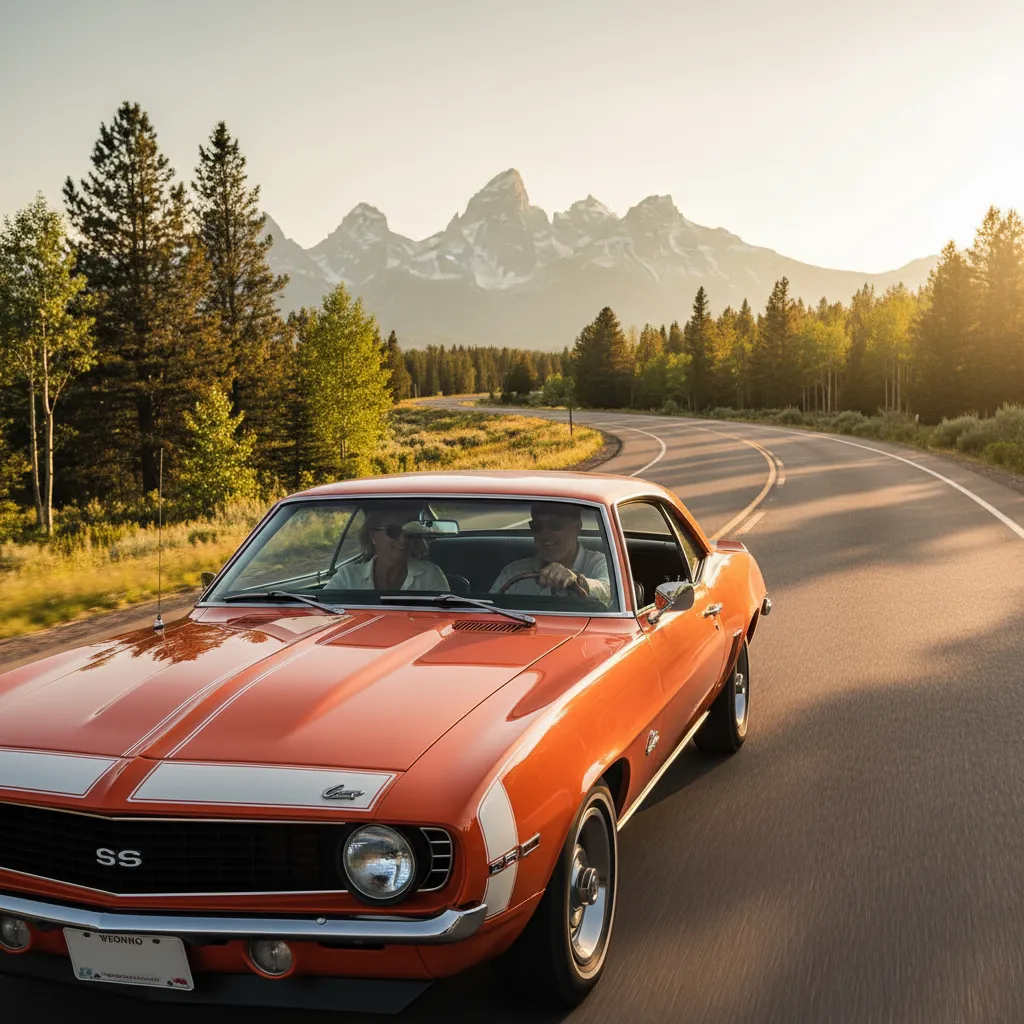
UNDERSTANDING COLLECTOR CAR LIABILITY RISKS
Classic car ownership creates liability exposures that standard auto insurance policies weren't designed to address—you're driving a vehicle worth $50,000-$200,000+ that can cause just as much bodily injury or property damage as a new car, but your asset exposure extends far beyond typical drivers because your net worth likely includes the valuable vehicle itself plus other collector cars, real estate, retirement accounts, and investments that plaintiffs can pursue if liability claims exceed your coverage limits. When a serious accident occurs in your 1967 Mustang or 1972 Chevy C10 and you're found at fault for injuries requiring $500,000 in medical care or property damage to multiple vehicles, standard $25,000/$50,000/$25,000 state minimum liability coverage leaves you personally liable for $450,000+ that could force you to liquidate your classic car collection, drain retirement accounts, or place liens on your home to satisfy the judgment. We've worked with hundreds of classic car owners across the Mountain West who initially carried inadequate liability limits because they assumed their collector car policy's physical damage coverage was the primary concern, not realizing that the liability exposure from causing an accident in a classic vehicle can be just as catastrophic as any modern car accident—with the added complication that classic car owners typically have more assets to protect. We structure liability coverage specifically for collector vehicle owners with limits of $100,000/$300,000/$100,000 minimum, but typically recommend $250,000/$500,000/$250,000 or higher, paired with umbrella liability policies of $1-2 million to protect your classic car collection, real estate, and accumulated wealth from lawsuits that could otherwise devastate everything you've built over decades of collecting and restoring vehicles.
COVERAGE ADAPTED TO YOUR COLLECTION
Standard auto liability policies treat all vehicles the same, but a garage housing a $20,000 daily driver and three classic cars worth $40,000-$100,000 each requires completely different liability structuring than someone with a single modern vehicle—your total asset exposure, the frequency and nature of your classic car use, and whether you attend car shows or participate in club events all affect your appropriate liability limits and coverage needs. We customize classic car liability coverage by analyzing your specific situation: the total value of your classic car collection (single vehicle versus multiple collectors), your usage patterns (occasional weekend drives versus regular car show attendance versus active club participation), your other assets requiring protection (home equity, investment accounts, other collector vehicles), whether you allow others to drive your classics (family members, club members, potential buyers during sales), and your participation in activities that create additional liability exposure like car shows where spectators can be injured or parades where accidents occur in crowded environments. For example, an owner with a single $35,000 classic truck driven only on sunny weekends for personal enjoyment might carry $100,000/$300,000/$100,000 liability limits as part of a bundled package with umbrella coverage, while a serious collector with five vehicles worth $400,000+ total who regularly attends regional car shows and participates in club tours needs higher underlying limits of $250,000/$500,000/$250,000 plus $2-5 million umbrella coverage to protect against the elevated exposure from both vehicle values and activity-based risks. Additionally, we coordinate liability coverage across your entire vehicle fleet—if you have modern daily drivers plus classic cars—ensuring your liability limits are consistent and adequate across all policies, that your umbrella coverage properly coordinates with all underlying policies, and that you're not paying for redundant coverage while leaving gaps between policies. The result is liability protection calibrated to your actual collector car ownership profile, the total value at risk, and your real-world usage patterns—not generic coverage that either leaves you dangerously underinsured or makes you pay for protection you don't need.
Local expertise matters
Independent agency committed to providing transparent, straightforward insurance solutions for Wyoming and Northern Colorado residents.
REAL CLASSIC CAR LIABILITY RISKS, REAL SOLUTIONS
Liability coverage that stands between you and lawsuits that could cost your collection
When Accidents Happen on Public Roads
You're driving your pristine 1968 Ford Mustang on a beautiful Saturday morning through the Wyoming countryside, conditions are perfect, but a car pulls out from a side road unexpectedly and you swerve to avoid them, losing control and crashing into another vehicle—injuring two passengers who require emergency transport, hospitalization, and months of medical treatment ultimately costing $250,000 in medical bills, lost wages, and pain and suffering damages. Classic cars handle differently than modern vehicles with anti-lock brakes and stability control, making accidents more likely in emergency situations, but the liability exposure is identical to any vehicle accident—you can be sued for all damages you cause regardless of what you were driving. Many classic car owners discover after serious accidents that they've been driving with only state minimum liability coverage of $25,000/$50,000/$25,000, adequate perhaps for their daily driver Subaru but catastrophically inadequate when facing $250,000+ in injury claims—leaving them personally liable for $200,000+ that creditors can pursue by garnishing wages, placing liens on their home, and potentially forcing sale of their classic car collection to satisfy the judgment. Even if you weren't technically at fault, defending yourself against serious injury allegations can cost $50,000-$100,000 in legal fees, and juries are sometimes unsympathetic to classic car owners they perceive as wealthy hobbyists driving "unnecessary" vehicles. We structure classic car liability coverage with minimum limits of $100,000/$300,000/$100,000 but strongly recommend $250,000/$500,000/$250,000 or higher for vehicles driven on public roads, coordinate this underlying liability coverage with umbrella policies of $1-2 million that provide additional protection beyond base limits, and ensure your liability coverage on classic cars matches or exceeds the coverage on your daily drivers—protecting you from lawsuits that could devastate your financial security and force liquidation of the collection you've spent years building.
When Car Show Incidents Turn into Lawsuits
You're displaying your beautifully restored 1957 Chevy Bel Air at a popular Colorado car show, hundreds of spectators are walking through admiring vehicles, and a child runs between cars, trips on your car's ground strap or wheel chock, falls into the side of your vehicle, and suffers serious facial injuries requiring reconstructive surgery—the parents sue you for $500,000 claiming you failed to maintain a safe display area and that your negligence caused their child's permanent disfigurement. Car show liability represents a unique exposure that many classic car owners never consider until facing a lawsuit—your vehicle is stationary and you're not driving, but you can still be held liable for injuries that occur around your displayed vehicle, and some standard auto liability policies specifically exclude coverage for incidents that occur when the vehicle isn't being operated. The complexity increases when car shows are held on private property or closed streets where standard "driving" definitions may not clearly apply, when show organizers have inadequate liability insurance leaving individual owners exposed, or when multiple parties (show organizers, property owners, individual car owners) all face joint liability making lawsuits particularly complicated. Many classic car owners assume the car show's liability insurance protects them, but show policies typically provide only very limited per-incident coverage and specifically exclude liability arising from individual exhibitor negligence, leaving you fully exposed when someone is seriously injured around your vehicle. We structure classic car liability coverage that specifically addresses car show participation and stationary vehicle liability exposure—confirming your policy covers incidents that occur when your vehicle is displayed not just when driving, ensuring coverage applies at car shows and organized events not just on public roads, reviewing show organizer insurance requirements to confirm your coverage meets their certificates of insurance demands, and in many cases recommending umbrella policies that provide additional protection beyond your underlying auto liability limits because car show injuries can generate particularly sympathetic juries (injured children, permanent disfigurement) leading to verdicts exceeding typical auto accident settlements.
When Your Collection Value Outgrows Your Coverage
Over ten years you've built a classic car collection worth $350,000—starting with a single $30,000 pickup truck and gradually acquiring a $65,000 Corvette, a $90,000 muscle car, and a $45,000 classic sedan—but your liability coverage is still the basic $50,000/$100,000/$50,000 policy you bought when you owned just one vehicle, and your total net worth including home equity, retirement accounts, and your vehicle collection now exceeds $800,000. Your liability exposure has changed dramatically as your collection has grown—you're now driving multiple vehicles with total value exceeding $350,000, your net worth has increased substantially making you a more attractive lawsuit target, you're probably attending more car shows and club events creating additional liability scenarios, and you may be allowing family members or fellow enthusiasts to drive your vehicles creating vicarious liability exposure—but your coverage hasn't evolved to match your changing risk profile. The fundamental principle of liability coverage states that your limits should equal or exceed your net worth because plaintiffs can potentially seize any assets not protected by insurance if judgments exceed your coverage, meaning your $100,000 liability limit leaves $700,000 in assets exposed including your entire classic car collection, home equity, and retirement savings. Many collectors never review liability coverage as their collections grow, focusing all attention on physical damage coverage (agreed value, restoration coverage) while completely neglecting the liability exposure that could force them to liquidate their entire collection to satisfy a judgment from a single serious accident. We proactively review classic car liability coverage as your collection evolves—ensuring your underlying liability limits increase as your net worth and vehicle values grow (typically $250,000/$500,000/$250,000 minimum for serious collectors), recommending umbrella liability policies that provide $1-5 million in additional protection beyond underlying limits, coordinating coverage across all your vehicles (daily drivers and classics) to ensure consistent adequate limits, and reviewing your total asset exposure annually to confirm your liability coverage continues to protect everything you've built—preventing the devastating scenario where decades of collecting and restoration are liquidated to pay a liability judgment that proper coverage would have protected against for a few hundred dollars in additional annual premium.
When Someone Else Drives Your Classic
You allow a fellow car club member to drive your 1970 Dodge Challenger during a club event, they're unfamiliar with the vehicle's power and handling characteristics, they lose control during acceleration, and crash into a guardrail—but the vehicle bounces back into traffic causing a multi-vehicle accident that injures three people with combined injury claims totaling $650,000, and all injured parties are suing both the driver and you as the owner under theories of negligent entrustment and vicarious liability. Permissive use creates complex liability scenarios for classic car owners because your insurance typically covers permissive drivers (people you give permission to drive your vehicle), but this exposes you to liability for their actions while driving your car, and courts increasingly hold vehicle owners liable not just for their own negligence but for failing to properly supervise or restrict who drives their vehicles, particularly with high-performance classic cars that require experience to operate safely. The situation becomes more complicated when the permissive driver has their own auto insurance—both policies may provide coverage creating coordination issues, the driver's policy may dispute coverage because they weren't driving their own vehicle, your policy becomes primary for your vehicle, and if the total damages exceed your liability limits you become personally liable for the difference even though you weren't driving at the time of the accident. Many classic car owners never consider this exposure when casually letting friends, family members, or fellow enthusiasts drive their vehicles at shows or events, assuming "my insurance covers them" without understanding that their insurance protects the driver and owner up to policy limits but leaves the owner personally exposed when damages exceed coverage—and a serious multi-vehicle accident with multiple injured parties can easily generate claims exceeding $500,000 or even $1 million. We help classic car owners understand permissive use liability exposure—explaining that your liability coverage applies when others drive your vehicle with your permission, clarifying that you can be held personally liable even though you weren't driving if damages exceed your policy limits, discussing whether your permissive use of classics (letting others drive at shows or events) requires higher liability limits than if you were the only driver, and structuring umbrella liability policies that provide additional protection beyond underlying limits specifically to address the elevated exposure from permissive use of valuable high-performance vehicles. You get guidance about insurance implications before letting others drive your classics—not discovering coverage gaps after an accident when it's too late to protect your collection from seizure to satisfy judgments.
CLASSIC CAR INSURANCE INSIGHTS THAT MATTER
Essential knowledge for protecting your collection and assets

Calculating Liability Coverage for Collector Car Owners
How to determine appropriate liability limits based on your total net worth, collection value, and usage patterns—including when underlying auto liability limits should increase, how umbrella policies coordinate with classic car coverage, and why collector car owners typically need significantly higher liability limits than the general driving population even though they drive less frequently.

Car Show Liability: What Collectors Need to Know
Understanding liability exposure from car show participation and stationary vehicle displays—covering what show organizer insurance actually protects versus gaps in coverage, how to confirm your auto policy covers show incidents not just driving, liability considerations when spectators interact with your vehicle, and certificate of insurance requirements for major regional shows.
COVERAGE FOR EVERY COLLECTOR STAGE
First-Time Collector
Just acquired your first classic car? Your priority is essential liability protection that covers both your new collector vehicle and your daily drivers while fitting within your insurance budget. We structure affordable classic car liability coverage starting at $100,000/$300,000/$100,000 minimum, often bundled with your daily driver auto and home insurance for multi-policy discounts, with clear explanation of how liability coverage protects your assets even when you're driving your classic only occasionally—giving you proper protection without overwhelming your budget as you enter the collector car hobby.
Growing Collection
Adding more classics to your garage? You're likely acquiring higher-value vehicles, attending more car shows and club events, and your total collection value is increasing substantially—requiring more comprehensive liability protection than your single-vehicle coverage provided. We expand your liability coverage to appropriate limits as your collection grows (typically $250,000/$500,000/$250,000 for multiple vehicles), begin incorporating umbrella liability policies of $1-2 million to protect your growing asset base, and coordinate coverage across your entire vehicle fleet ensuring consistent adequate protection as you transition from casual hobbyist to serious collector.
Established Collector
Built a substantial collection worth $300,000-$500,000+? You're managing multiple valuable vehicles, regularly participating in regional shows and tours, possibly allowing others to drive your vehicles, and your total net worth including your collection requires sophisticated liability protection beyond basic auto coverage. We structure comprehensive liability architecture including high underlying limits of $250,000/$500,000/$250,000 minimum, umbrella policies of $2-5 million that protect your accumulated wealth and vehicle collection from catastrophic liability judgments, and proactive annual reviews ensuring your liability coverage evolves as you acquire additional vehicles or your net worth grows—protecting decades of collecting from a single lawsuit.
Collection Transition
Downsizing your collection, transitioning to different vehicles, or preparing for estate transfer? Your liability coverage needs adjustment as your collection changes—potentially reducing limits if selling vehicles and decreasing net worth, or maintaining high coverage if transitioning to fewer but more valuable vehicles. We help coordinate liability coverage through collection transitions—ensuring continuous adequate protection during sales and acquisitions, reviewing whether downsizing allows premium savings through reduced limits while still protecting remaining assets, and structuring estate planning considerations that ensure your vehicles and heirs are protected during ownership transfers.
FAQs
Yes, absolutely! Your standard auto policy may not adequately cover the true value of your classic vehicle, especially if it's appreciating. Classic car insurance offers agreed value coverage, which ensures you're paid the car's current market value without depreciation in case of a covered loss. Don't let a standard policy undervalue your unique ride; get a specialized classic car quote today.
The cost of classic car insurance depends on several factors, including your vehicle's agreed value, how and where it's stored, and your annual mileage. Unlike standard auto insurance, classic policies often have lower premiums because these cars are typically driven less and maintained meticulously. To get a precise quote tailored to your cherished classic, give us a call!
Classic car insurance offers specialized coverage designed for collector vehicles, including "agreed value" coverage, which guarantees you’ll receive the car’s full insured value in case of a total loss. It can also cover spare parts, roadside assistance specifically for classics in Wyoming, and even provide coverage if your car is at a show. This ensures your investment is protected far beyond a standard policy.
Classic car insurance typically excludes damage from everyday use, racing, or commercial purposes. It generally only covers the vehicle under specific conditions, like limited pleasure driving, exhibitions, and club events. Always review your policy for exact exclusions and discuss how you use your classic with your agent to ensure proper coverage.
For classic car insurance, an appraisal determines your vehicle's "agreed value," which is the amount you’ll be paid if it's a total loss. You’ll usually need to submit photos, receipts for restorations, and sometimes a professional appraisal report. We're here to guide you through this process to ensure your classic, whether it's a vintage pickup from an oil field or a meticulously restored muscle car, is accurately valued and fully protected.
Agreed Value coverage means you and the insurer agree on your car's value upfront, and you're guaranteed that amount if it’s totaled. Stated Value, however, means the insurer pays either the stated amount or the actual cash value (ACV) at the time of loss, whichever is less. For classics, especially those driven through Wyoming's changing weather, Agreed Value offers far greater peace of mind and protection, as it locks in your car's true worth, and we highly recommend it.