
PERSONAL PROPERTY COVERAGE THAT PROTECTS WHAT YOU OWN
From burst pipes destroying basement furniture to theft of electronics to hail damage ruining possessions in your garage—Mountain West homes face constant threats to the belongings you've worked years to accumulate. As an independent brokerage serving Wyoming, Colorado, Utah, and Montana, we compare 20+ carriers to bundle personal property coverage with your auto and home insurance—protecting everything you own with replacement cost coverage that actually replaces what's lost, not just pays depreciated pennies on the dollar. We're local experts who answer the phone, explain coverage limits and sub-limits in plain English, and make sure your belongings are truly protected when disaster strikes.

COMPREHENSIVE PERSONAL PROPERTY PROTECTION
Bundled coverage that protects your belongings and saves you money on every policy

UNDERSTANDING WHAT'S ACTUALLY COVERED
Most homeowners and renters have no idea what their personal property coverage actually protects until they file a claim and discover painful gaps—jewelry limited to $1,500 when your engagement ring is worth $15,000, electronics capped at $2,500 when you have $8,000 in computers and gaming equipment, or worse, discovering you have actual cash value coverage that pays only $300 for the 8-year-old television that costs $1,000 to replace today. Personal property coverage protects your belongings—furniture, electronics, clothing, appliances, tools, and countless other possessions—from perils like fire, theft, vandalism, and weather damage, but the devil is in the details: sub-limits cap reimbursement for high-value categories regardless of your total coverage limit, actual cash value policies pay depreciated values that rarely cover replacement costs, and coverage for belongings away from home is typically limited to just 10% of your total limit. We structure personal property coverage by first understanding what you actually own—conducting a belongings inventory that identifies high-value items requiring scheduled coverage, explaining the critical difference between actual cash value (which pays depreciated pennies) and replacement cost coverage (which pays what you need to actually replace items), reviewing sub-limits for jewelry, electronics, firearms, and other categories where standard policies leave massive gaps, and bundling with your auto insurance to save 18-40% on total premiums while ensuring comprehensive protection. You get coverage built for YOUR belongings with limits that actually protect what you own, not generic policies that leave you paying thousands out of pocket after covered losses because you didn't understand sub-limits until it was too late.
BUNDLING THAT SAVES SERIOUS MONEY
Buying personal property coverage through separate home or renters insurance and auto insurance from different carriers costs you 18-40% more than bundling both policies with a single carrier—that's $600 to $1,400 annually in unnecessary premium costs for a typical family paying $3,500 combined for home and auto coverage. As an independent brokerage with access to 20+ carriers, we don't just offer bundling—we compare bundled pricing across multiple carriers to find the combination that delivers the best total value, because sometimes Carrier A offers the best bundled rate while Carrier B might be cheapest for auto alone, and only by comparing both scenarios can we determine your true lowest cost. We structure bundled coverage by quoting your auto and home/renters insurance across multiple carriers simultaneously, calculating total bundled premiums including multi-policy discounts that average 18% but reach 40% with some carriers, comparing bundled totals against unbundled scenarios to verify bundling actually saves you money (not always guaranteed), and layering additional discounts on top of bundling—claim-free history, security systems, good student discounts, paid-in-full discounts—that can compound to 30-40% total savings. For example, a family paying $2,000 for auto and $1,500 for homeowners separately ($3,500 total) might pay just $2,870 bundled with an 18% discount, saving $630 annually, and with additional discounts for security systems and claim-free years, total premiums might drop to $2,450—a $1,050 annual saving or $87.50 monthly. You get the absolute lowest total cost through strategic bundling with carriers offering the best combined rates, not just accepting bundling discounts from your current carrier without shopping the competition.
Local expertise matters
Independent agency committed to providing transparent, straightforward insurance solutions for Wyoming and Northern Colorado residents.
REAL PERSONAL PROPERTY RISKS, REAL PROTECTION
Bundled coverage that protects your belongings from the losses that devastate families
When Fire Destroys Everything You Own
It's 2 AM in Fort Collins, an electrical fire starts in your garage, and despite firefighters' best efforts the flames spread into your home—destroying not just the structure but every piece of furniture, every article of clothing, every electronic device, every kitchen item, every piece of sporting equipment, your kids' toys, your photo albums, and countless other belongings you've accumulated over fifteen years of marriage and homeownership. Personal property losses in total fire destruction typically range from $50,000 to $150,000 for average households, with well-furnished homes easily reaching $200,000+ when you account for furniture ($20,000-40,000), electronics and appliances ($15,000-30,000), clothing and shoes for entire family ($10,000-20,000), kitchen items and pantry ($5,000-10,000), tools and garage equipment ($5,000-15,000), sporting and recreational equipment ($3,000-10,000), and countless smaller items that add up shockingly fast when you're replacing literally everything you own. Many homeowners discover too late that their personal property coverage is inadequate—only 50% of dwelling coverage when they needed 70%, actual cash value coverage that depreciates their 5-year-old furniture and 8-year-old electronics down to a fraction of replacement cost, or sub-limits on jewelry, firearms, and electronics that cap reimbursement far below actual losses, leaving them tens of thousands of dollars short of what they need to actually replace their belongings and rebuild their lives. We structure personal property coverage with replacement cost endorsements that pay what you actually need to replace items at today's prices (not depreciated values that leave you paying the difference out of pocket), dwelling-appropriate limits typically at 70% of your home's value to ensure adequate total coverage for well-furnished homes, scheduled coverage for jewelry, electronics, firearms, and other high-value items that exceed standard sub-limits, and proactive inventory guidance before losses occur—helping you document what you own with photos, receipts, and descriptions that make claims processing faster and more complete when you're already traumatized by losing everything and don't have the emotional energy to fight with adjusters over valuations.
When Theft Takes Your Valuables
You return home from a long weekend in Utah to find your back door kicked in and your Casper home ransacked—thieves have stolen your wife's jewelry collection including her $15,000 engagement ring and $8,000 in other pieces, your laptop and desktop computer worth $4,000 combined, your $2,500 camera equipment, your husband's firearms collection worth $6,000, your flat screen TVs totaling $3,000, and various other electronics and valuables for a total loss exceeding $40,000. Standard homeowners personal property coverage will reimburse you only a fraction of this loss because sub-limits cap jewelry at $1,500 (you lose $21,500 of the $23,000 jewelry loss), firearms at $2,500 (you lose $3,500), and potentially electronics at $2,500-5,000 depending on your policy (you lose another $1,500-4,000)—meaning despite having $100,000 in total personal property coverage, you'll recover perhaps $15,000 to $20,000, leaving you with a $20,000 to $25,000 uninsured loss that comes directly out of your savings or retirement accounts. Most couples don't realize their jewelry requires scheduled personal property coverage (also called a valuable items endorsement or personal articles floater) that specifically lists each piece with its appraised value and removes sub-limits, or that firearms collections, camera equipment, and high-end electronics similarly need scheduling if their combined value exceeds standard sub-limits that haven't been reviewed since you bought your policy. We prevent these catastrophic coverage gaps by conducting detailed personal property inventories that identify which items require scheduled coverage—typically jewelry worth more than $1,500 total, firearms collections exceeding $2,500, camera or video equipment over $2,500, musical instruments, art, collectibles, or any other category where you own items exceeding standard sub-limits—then adding scheduled personal property endorsements that list these items specifically with agreed values based on receipts or appraisals, removing sub-limits entirely and often providing broader coverage including accidental loss for items like jewelry that might be lost rather than stolen. Scheduled personal property typically costs $16-25 per $1,000 of scheduled value, meaning that $23,000 jewelry collection costs only $368-575 annually to properly protect, a tiny premium compared to the $21,500 uninsured loss you'd suffer relying on standard sub-limits.
When College Students Travel With Valuables
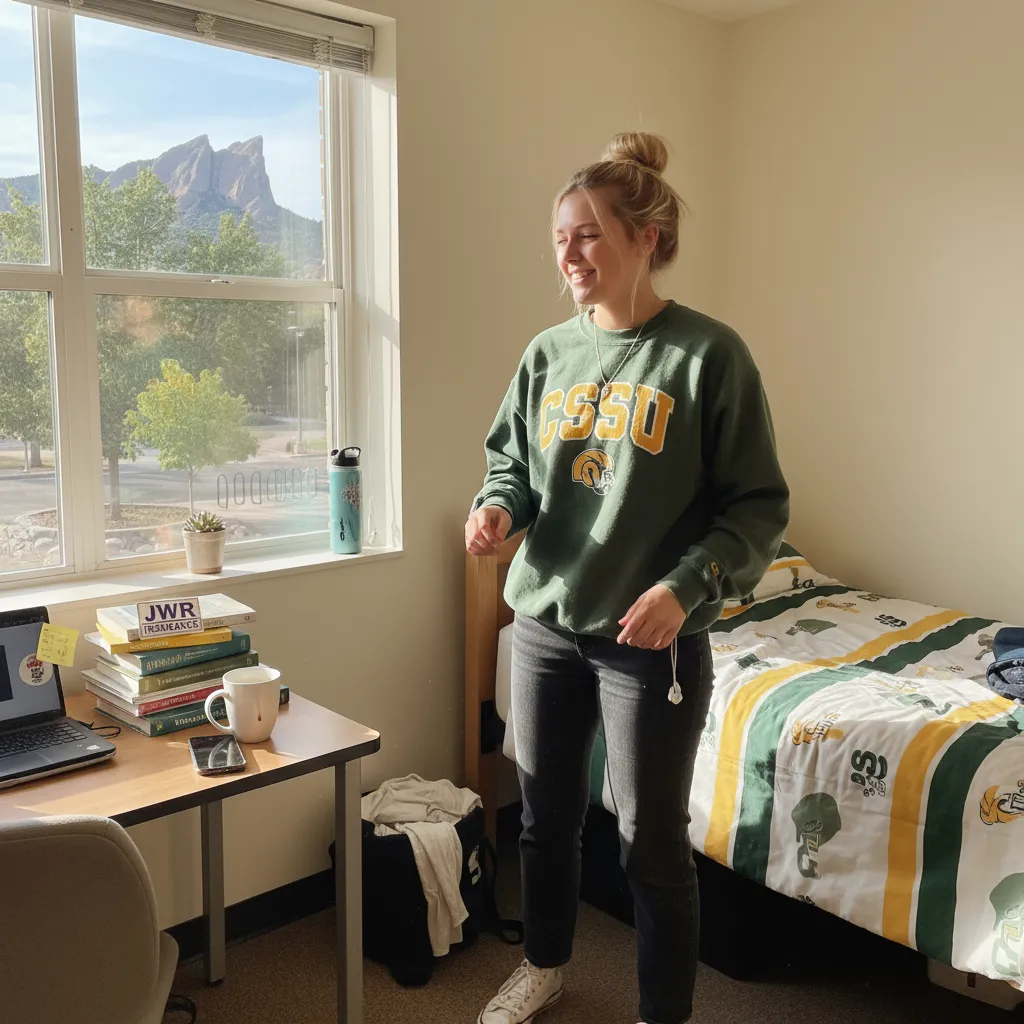
Your daughter is attending Colorado State University in Fort Collins, living in a dorm with her laptop ($1,200), iPad ($800), iPhone ($1,000), bike ($600), clothing and shoes ($3,000), jewelry including graduation gifts ($2,500), textbooks ($800), and dorm furnishings ($1,500)—roughly $11,400 in belongings you've purchased over the past year to set her up for college—when someone breaks into her dorm room during spring break and steals most of her electronics and jewelry. You assume your homeowners personal property coverage in Casper protects her belongings at college because standard policies provide worldwide coverage, but you discover two critical limitations: coverage for belongings away from home is typically limited to 10% of your total personal property coverage (if you have $50,000 in coverage, only $5,000 applies to her dorm belongings, leaving $6,400 of her loss uncovered), and standard jewelry sub-limits of $1,500 mean her $2,500 in jewelry is covered to only $1,500 even within that 10% away-from-home limit. Your daughter's actual reimbursement will be approximately $5,000 minus your deductible (typically $1,000-2,500), meaning you might recover $2,500 to $4,000 of an $11,400 loss—requiring you to pay $7,400 to $8,900 out of pocket to replace her stolen belongings so she can continue her education. Many parents don't realize that college students living away from home create specific personal property coverage gaps requiring proactive solutions: increasing total personal property coverage limits so the 10% away-from-home limit is adequate (you'd need $114,000 in total coverage for the 10% limit to cover her $11,400 in belongings—likely far higher than your current limits), purchasing separate renters insurance for the student covering belongings at their specific dorm or apartment location (typically $15-25 monthly for $20,000-30,000 in coverage with lower deductibles), or scheduling high-value items like jewelry and electronics specifically so they're covered at full value anywhere in the world regardless of away-from-home limits. We help families with college students evaluate these options before fall semester begins—typically recommending inexpensive renters insurance in the student's name covering their dorm belongings with its own separate coverage limits and lower deductible, scheduling any high-value jewelry on the parents' homeowners policy for worldwide protection without sub-limits, and educating students about what coverage actually protects (theft and fire, yes; accidental damage to their laptop, probably not unless specifically endorsed) so they understand their actual protection and take appropriate precautions with valuable items.
When Adjusters Dispute Your Valuations
Your basement floods from a sewer backup during heavy spring runoff in Loveland, destroying your finished living space including $12,000 in furniture (sectional sofa, entertainment center, recliners, coffee tables), $6,000 in electronics (TV, gaming systems, sound system, computers), $4,000 in clothing and shoes stored in basement closets, and $3,000 in tools and sporting equipment stored in the basement utility area—a total loss of approximately $25,000. You file a personal property claim expecting your $75,000 in personal property coverage with replacement cost endorsement to reimburse you the full amount, but the insurance adjuster disputes your valuations—claiming your 5-year-old sectional sofa is worth only $3,000 not the $8,000 you paid (or the $9,500 replacement cost today), your electronics are worth only depreciated actual cash value despite your replacement cost coverage because you don't have receipts, your clothing loss is inflated because you're claiming retail replacement costs when the adjuster wants to pay thrift store values, and your tools and sporting equipment aren't adequately documented so the adjuster offers only $1,500 instead of your claimed $3,000. The adjuster's initial settlement offer is $14,000—$11,000 short of your actual loss—and you're facing the prospect of either accepting an unfair settlement or spending months fighting with the insurance company, potentially hiring a public adjuster who will take 10-15% of your final settlement ($1,400-2,100 of your own money) or an attorney who takes 33-40%, all because you didn't have detailed documentation and don't know how to negotiate effectively with adjusters trained to minimize payouts. Without an independent agent advocating for you, most homeowners either accept these lowball settlements out of exhaustion or pay thousands to professionals who could have been avoided if they'd had expert guidance from the beginning. We fight for fair personal property settlements throughout the claims process—helping you document losses immediately after they occur with detailed inventories listing brand, model, age, original purchase price, and current replacement cost for every item (documentation adjusters can't easily dismiss), researching current replacement costs using retailer websites and receipts when you don't have original purchase documentation, negotiating with adjusters when initial settlements are unreasonably low by citing policy language about replacement cost coverage and arguing against inappropriate depreciation, and escalating to carrier claims supervisors when adjusters are being unreasonable about standard valuations. We typically improve settlement offers by $3,000 to $10,000 or more through informed negotiation and proper documentation—recovering money that's rightfully yours under your policy but that insurance companies hope you won't fight for because you don't understand the claims process or don't have energy to battle while you're already dealing with the stress of significant property loss. You get an expert fighting for your interests at no additional cost because we're already compensated by your policy premiums, not taking a percentage of your settlement like public adjusters or attorneys you'd otherwise need to hire to get fair treatment.
PERSONAL PROPERTY INSIGHTS THAT MATTER
Practical knowledge to protect your belongings and maximize your bundling savings
Creating a Home Inventory Before You Need It
Step-by-step guidance for documenting your belongings with photos, receipts, and descriptions that make personal property claims faster and more complete—including which items require special documentation, how to store inventory records so they survive the same disasters that destroy your belongings, free inventory apps and tools, and how detailed documentation typically increases claim settlements by 20-40% because adjusters can't dispute what you can prove you owned.

When Bundling Actually Costs You Money
How to evaluate whether bundled insurance from a single carrier truly saves money versus buying unbundled policies from different carriers—including the math for comparing total bundled premiums against unbundled alternatives, scenarios where specialized carriers beat bundled rates despite multi-policy discounts, the convenience value of bundling that might justify slightly higher premiums, and how to comparison shop effectively every 2-3 years to ensure your bundled rates remain competitive.
COVERAGE FOR EVERY LIFE STAGE
Young Renter
Just moved into your first apartment? Your priority is affordable renters insurance covering your basic belongings—furniture, electronics, clothing, and kitchen items—while learning to be a responsible adult without overpaying for coverage you don't yet need. We bundle renters insurance with your auto coverage for 15-25% combined savings, structure personal property coverage at levels appropriate for starter apartments (typically $15,000-25,000), and keep premiums under $20-30 monthly while providing essential protection if fire, theft, or water damage strikes.
Growing Family
Bought your first home and starting a family? You're rapidly accumulating belongings—nursery furniture, kids' toys and equipment, upgraded electronics and appliances, lawn and garage tools—requiring substantially more personal property coverage than your renter days while managing a tight budget with mortgage, daycare, and family expenses. We bundle home and auto insurance for 18-30% savings over separate policies, increase personal property coverage to 70% of dwelling value to account for your growing belongings, add replacement cost coverage so claims actually replace what's lost, and keep total premiums manageable through multi-policy and claim-free discounts.
Established Household
Home mostly paid off with kids in high school or college? You've accumulated significant belongings over decades—quality furniture throughout your home, extensive wardrobes, valuable electronics and appliances, tools and recreational equipment, jewelry and collectibles—requiring sophisticated personal property coverage with scheduled items for high-value possessions exceeding standard sub-limits. We review your accumulated belongings proactively, schedule jewelry, firearms, electronics, and other items exceeding sub-limits, ensure replacement cost coverage protects your quality furnishings at full value, bundle with auto and potentially umbrella policies for maximum savings, and adjust coverage as kids move to college requiring renters policies or extended away-from-home coverage.
Retirement Transition
Downsizing to smaller home or managing vacation property in addition to primary residence? Your belongings inventory is changing—potentially fewer possessions if downsizing but higher-value items if you've kept quality pieces, seasonal occupancy patterns creating unoccupied home exposures, and potentially multiple properties requiring coordinated coverage without duplication or gaps. We help transition your coverage as living situations change—reducing personal property limits if downsizing to match your actual belongings, adding unoccupied home endorsements for vacation properties left empty for extended periods, coordinating coverage across multiple properties to eliminate duplicate coverage and avoid gaps, and restructuring bundled policies as auto needs potentially decrease while home coverage becomes more complex.
FAQs
Bundling is a smart choice because it simplifies policy management, offers potential for substantial savings through multi-policy discounts, and can lead to better overall coverage limits. For Wyoming residents, this means robust protection against common risks like severe winter weather impacting your home and vehicle, or property theft.
Bundling your auto and home/renters insurance can lead to significant savings, often between 15-25% on your total premiums. For our Wyoming clients, we frequently see combined annual savings ranging from $300 to $600. Contact JWR today for a personalized quote to see your potential savings.
Bundling with JWR offers seamless coverage and often comes with additional discounts. You'll have a single point of contact for all your insurance needs and claims, whether it's hail damage to your car on I-80 or a burst pipe in your Cheyenne apartment. This simplifies your insurance management considerably.
While bundling provides comprehensive protection, certain situations are typically not covered without specific endorsements. Common exclusions include floods, earthquakes, intentional damage, and specific types of business-related claims. Always review your policy details with your JWR agent to understand what's covered.
Bundling with JWR offers key advantages like increased convenience, larger multi-policy discounts, and access to a dedicated local agent who understands Wyoming's unique risks. This includes understanding concerns like oil field traffic in the auto policy or harsh winters and property values for your home or renters insurance.
Getting a bundled quote and switching to JWR is a straightforward process. You can start with a simple online form or a quick phone call to one of our local agents. We'll handle the process of transferring your existing policies and ensure there are no gaps in coverage for your vehicles and home or apartment in Wyoming.