
SPARE PARTS COVERAGE THAT PROTECTS YOUR RESTORATION INVESTMENT
Classic car restoration means accumulating valuable spare parts—original engines, transmissions, trim pieces, and rare components you've spent years sourcing through specialty suppliers, car shows, and online networks. As an independent brokerage serving classic car enthusiasts across Wyoming, Colorado, Utah, and Montana, we compare 20+ specialty carriers to find spare parts coverage that actually protects your entire inventory—stored in garages, workshops, or storage facilities—from theft, fire, water damage, and other losses that standard homeowners policies exclude or severely limit. We're classic car enthusiasts ourselves who understand the irreplaceable value of parts you've carefully acquired, and we make sure your restoration investment is protected from day one through completion.
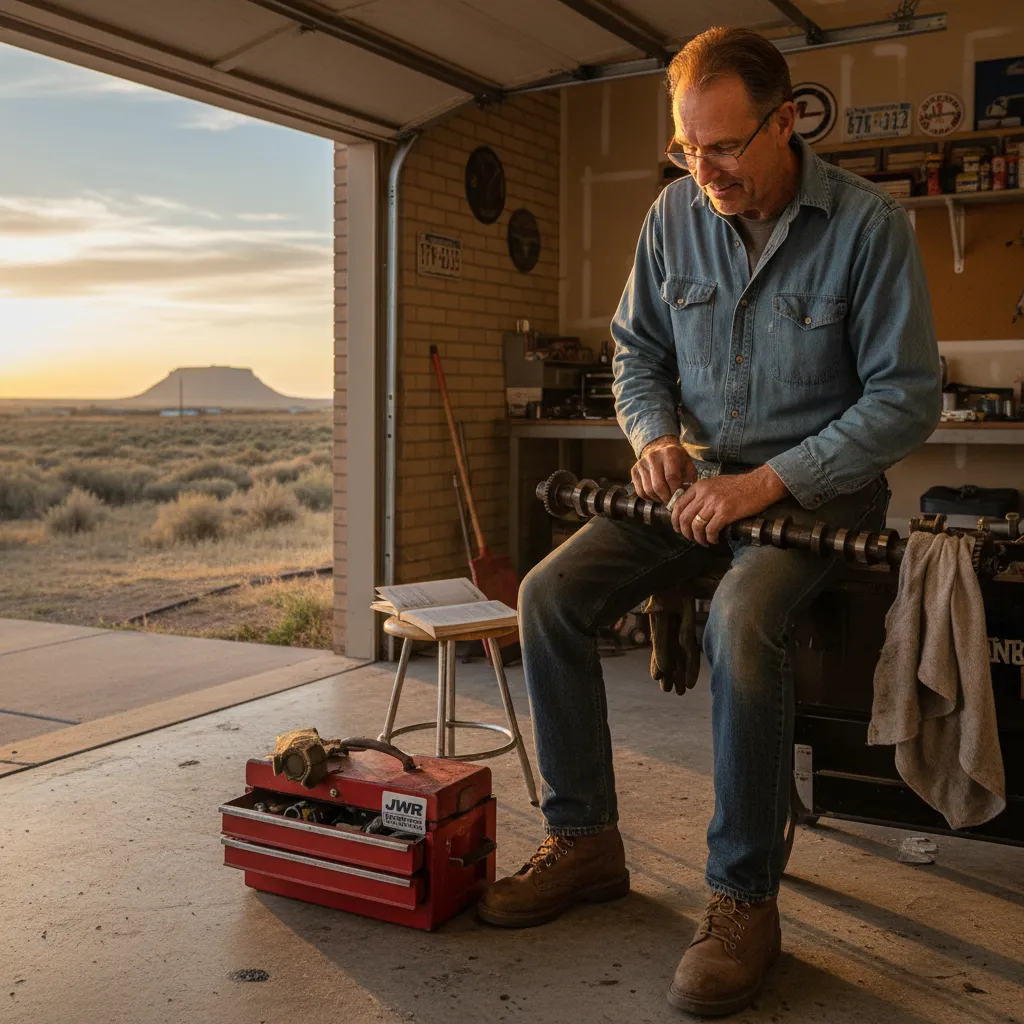
COMPREHENSIVE SPARE PARTS PROTECTION
Coverage designed specifically for the valuable components serious restorers collect

UNDERSTANDING RESTORATION PARTS VALUE
Classic car restorers face a unique financial vulnerability that most don't recognize until it's too late—your spare parts collection represents thousands of dollars in carefully accumulated investment, yet standard homeowners insurance typically caps off-premises property coverage at just 10% of your personal property limits, meaning a $50,000 homeowners policy provides only $5,000 for parts stored in garages or storage facilities. The reality is even worse because standard policies explicitly exclude many common threats to stored automotive parts: water damage from flooding, theft from unattended vehicles, pest damage, and losses during shipping or transport to restoration shops. A collector maintaining $8,000 worth of spare parts—a modest inventory for anyone doing serious restoration work—could discover after a garage fire or storage unit theft that their homeowners policy pays only a fraction of replacement cost, if anything at all. We structure dedicated spare parts coverage specifically for classic car restoration components, providing blanket coverage for your entire inventory or scheduled coverage for high-value items like original engines ($2,000-$5,000), rare transmissions ($1,500-$3,500), or original trim and body panels ($500-$2,000 each)—protecting everything you've spent years acquiring at annual premiums starting around $19 for enhanced coverage beyond base policy limits. Unlike generic personal property coverage, spare parts policies through specialized classic car carriers employ adjusters who actually understand collector parts markets, can properly value a rare carburetor or original fuel injection system, and won't force you to fight for fair settlements when you're trying to replace irreplaceable components.
CUSTOMIZED COVERAGE APPROACHES
Not all classic car restorers maintain the same type of parts inventory, yet most insurance approaches treat everyone identically—but a collector maintaining dozens of small components for a single vehicle needs different coverage than someone stockpiling complete engines and transmissions for multiple restoration projects, and neither should pay for protection that doesn't match their actual situation. We structure spare parts coverage using two distinct approaches tailored to how you actually collect and store components: blanket coverage provides a total coverage limit (typically $2,000-$10,000) protecting your entire parts collection without requiring itemization of every component, ideal for restorers maintaining diverse inventories where constant cataloging would be impractical, while scheduled coverage requires listing specific high-value items with individual limits, perfect for protecting major components like that $3,500 original engine you've been storing for five years or the $2,000 transmission awaiting installation. For example, a Mustang restorer maintaining mostly trim pieces, weatherstripping, interior components, and general mechanical parts under $500 each would benefit from $5,000 blanket coverage protecting everything without paperwork, while a serious multi-vehicle collector maintaining multiple engines, transmissions, and rare fuel system components worth thousands each should schedule major items individually to ensure proper limits while maintaining blanket coverage for general inventory. We also address storage location complexity that standard policies ignore—parts stored in your climate-controlled home garage face different coverage considerations than components in rented storage units, shared workshop spaces, or in transit to specialty restoration shops, and your coverage needs to account for these geographic and security variations without leaving gaps. The result is protection calibrated to YOUR actual restoration pattern and inventory profile—whether you're a weekend warrior maintaining $3,000 in parts for a single project or a serious collector with $15,000+ in components supporting multiple vehicles in various restoration stages.
Local expertise matters
Independent agency committed to providing transparent, straightforward insurance solutions for Wyoming and Northern Colorado residents.
REAL RESTORATION RISKS, REAL PROTECTION
Spare parts coverage that stands between you and costly collection losses
When Storage Unit Theft Strikes
You're maintaining restoration parts for two classic vehicles in a rented storage unit—an original transmission you paid $2,500 for after six months of searching, a spare engine block worth $3,200, various trim pieces totaling another $1,800, plus wheels, interior components, and mechanical parts bringing your total inventory to roughly $9,500. Thieves target your storage facility during a weekend, breaking into your unit along with several others, and steal your transmission, engine block, and highest-value trim pieces—approximately $7,500 in components that took you three years to accumulate through car shows, online auctions, and specialty suppliers. Without dedicated spare parts coverage, you discover your homeowners insurance has a 10% off-premises coverage limit capping your storage unit contents at $5,000 regardless of actual value, leaving you paying $2,500+ out of pocket—and that's before considering the deductible and the reality that finding replacement components could take another year of searching with no guarantee you'll find original equipment manufacturer (OEM) parts of equivalent quality. Many collectors learn too late that standard policies also exclude theft from storage units unless certain security requirements are met, potentially denying claims entirely if the facility lacked specific alarm systems or access controls that weren't disclosed in your policy. We structure spare parts coverage with appropriate limits for your actual inventory value (not artificial 10% caps), specific protection for off-premises storage recognizing that serious restorers maintain parts in multiple locations, and coverage through specialized classic car carriers whose adjusters understand that replacement cost for a stolen original transmission means finding another original unit on the collector market at current pricing—not just cutting a check for a generic rebuilt transmission that doesn't match your restoration standards. Enhanced coverage at $28 annually could protect that entire $9,500 inventory, meaning a single theft recovery more than justifies decades of premium payments.
When Garage Fires Destroy Everything
Your detached garage houses your restoration project vehicle plus your accumulated spare parts inventory—two spare engines on stands, a transmission awaiting rebuild, shelves of original trim pieces, boxes of weatherstripping and seals, fuel system components, and miscellaneous mechanical parts representing five years of opportunistic purchasing whenever rare components appeared on the market. An electrical fire starts in the garage late at night, and despite fire department response, the building is a total loss—your vehicle suffers major fire and water damage, but your spare parts inventory is completely destroyed, representing approximately $12,000 in components including a $4,500 original engine you'd been storing for three years, a $2,800 transmission, $3,200 in trim and body panels, and $1,500 in miscellaneous components. This catastrophic loss reveals the full inadequacy of standard homeowners coverage: your policy covers the garage structure and the vehicle through your classic car insurance, but your homeowners personal property coverage for the parts maxes out at $10,000 with a $2,500 deductible, and the adjuster disputes whether several high-value items were actually in the garage because you lack sufficient documentation—leaving you fighting for a $7,500 net settlement when actual replacement cost exceeds $12,000, not counting the years of searching required to replace rare components. Worse, your homeowners rates increase after the claim, adding insult to financial injury. We structure spare parts coverage as an integrated component of your classic car policy rather than relying on homeowners coverage, providing dedicated limits for parts inventory separate from vehicle coverage, working with adjusters who understand collector parts markets and don't reflexively dispute high-value component claims, and offering agreed-value approaches for scheduled high-value items where value is established at policy inception rather than disputed after losses. For restorers maintaining substantial inventories, $10,000+ spare parts coverage costs roughly $35-45 annually—a fraction of the out-of-pocket loss you'd face in a total-loss fire scenario, and significantly less than the premium increase you'd experience on homeowners insurance after a major claim.
When Your Restoration Gets Serious
You started your restoration hobby five years ago with a single classic Mustang and basic parts coverage of $500 included in your classic car policy—adequate when your inventory consisted of an extra carburetor, some trim pieces, and miscellaneous small components totaling maybe $1,200. Fast forward to today: you've now acquired a second vehicle (a Camaro project car), your Mustang restoration has progressed requiring accumulation of major components, and your current parts inventory includes two complete engines ($7,000 combined), transmissions for both vehicles ($4,500 total), substantial trim and body panel collections ($3,500), interior components ($2,200), and miscellaneous mechanical parts ($1,800)—approximately $19,000 in total spare parts supporting both restoration projects. Your coverage situation hasn't evolved with your hobby, meaning you're now exposed to a $18,500 gap between your $500 base coverage and your actual inventory value—and if a significant loss occurs (fire, major theft, flooding), you're personally absorbing nearly the entire financial hit. Many multi-vehicle collectors don't realize their spare parts inventory has grown dramatically because accumulation happens gradually—you buy an engine here, acquire trim pieces at a car show there, purchase a transmission when one becomes available—and several years later you're maintaining a substantial parts collection without having updated coverage since your initial policy. We proactively review spare parts coverage as your restoration projects expand, helping you recognize when your inventory has outgrown base coverage limits, structuring blanket coverage appropriate for your current collection size ($10,000-$20,000+ for serious multi-vehicle restorers), and potentially scheduling your highest-value components (those engines, transmissions) individually to ensure proper limits. We also help you conduct simple inventory assessments—photographing your parts, saving receipts, creating basic spreadsheets listing major components and approximate values—so you have documentation supporting claims if losses occur and clear understanding of your actual financial exposure. Coverage evolution costs less than you'd think: moving from $500 base coverage to $15,000 enhanced coverage typically adds only $30-40 annually, while your inventory exposure has grown by $18,500+—exceptional risk management value for serious collectors whose hobby has become a substantial financial investment.
When Claims Get Complicated
Your storage building experiences water damage during spring runoff—melting snow overwhelms drainage, water intrudes through the foundation, and several boxes of stored parts sustain water damage including electrical components, interior pieces, weatherstripping, and various mechanical parts. You file a claim, the insurance adjuster visits and agrees there's damage, but then disputes begin: the adjuster questions whether the damaged parts were actually original equipment manufacturer (OEM) components or aftermarket reproductions (dramatically different values), requests receipts you don't have for parts acquired at car shows years ago, uses generic auto parts pricing databases showing $50 for a fuel pump when the actual collector market price for your original unit is $400, and ultimately offers a settlement of $1,800 when your documented replacement cost exceeds $4,500. Without an agent advocating for you, you're alone fighting an insurance company with every incentive to minimize the payout—trying to explain why original parts cost multiples of reproduction pricing to an adjuster who doesn't understand collector markets, gathering documentation you weren't told you needed, researching replacement costs through specialty suppliers to counter the insurer's lowball database pricing, and potentially hiring expensive public adjusters (taking 10-15% of your settlement) or attorneys because you have no other way to fight an unfair valuation. Most restorers lack the insurance expertise to effectively dispute adjusters' findings, don't know which documentation carriers actually require versus what adjusters claim is required, and ultimately accept inadequate settlements because fighting seems impossible. We advocate throughout the spare parts claims process—reviewing damage assessments to ensure accuracy, helping you gather appropriate documentation proving OEM authenticity and current replacement costs, communicating with adjusters using industry language they respect and specific collector market evidence they can't easily dismiss, and escalating disputes when adjusters are applying generic auto parts valuation to specialty collector components. Our relationships with specialized classic car carriers mean we know which adjusters understand collector parts markets versus which ones need education, we can connect you with specialty suppliers who provide replacement cost documentation that supports fair settlements, and we ensure you're not pressured into accepting lowball offers just because the claims process feels overwhelming. You get expert advocacy at no additional cost—we're already compensated by your policy, and our reputation depends on successful claims outcomes—turning complex parts claims into fair settlements that actually let you replace what you lost.
SPARE PARTS COVERAGE INSIGHTS THAT MATTER
Essential knowledge for protecting your restoration parts investment
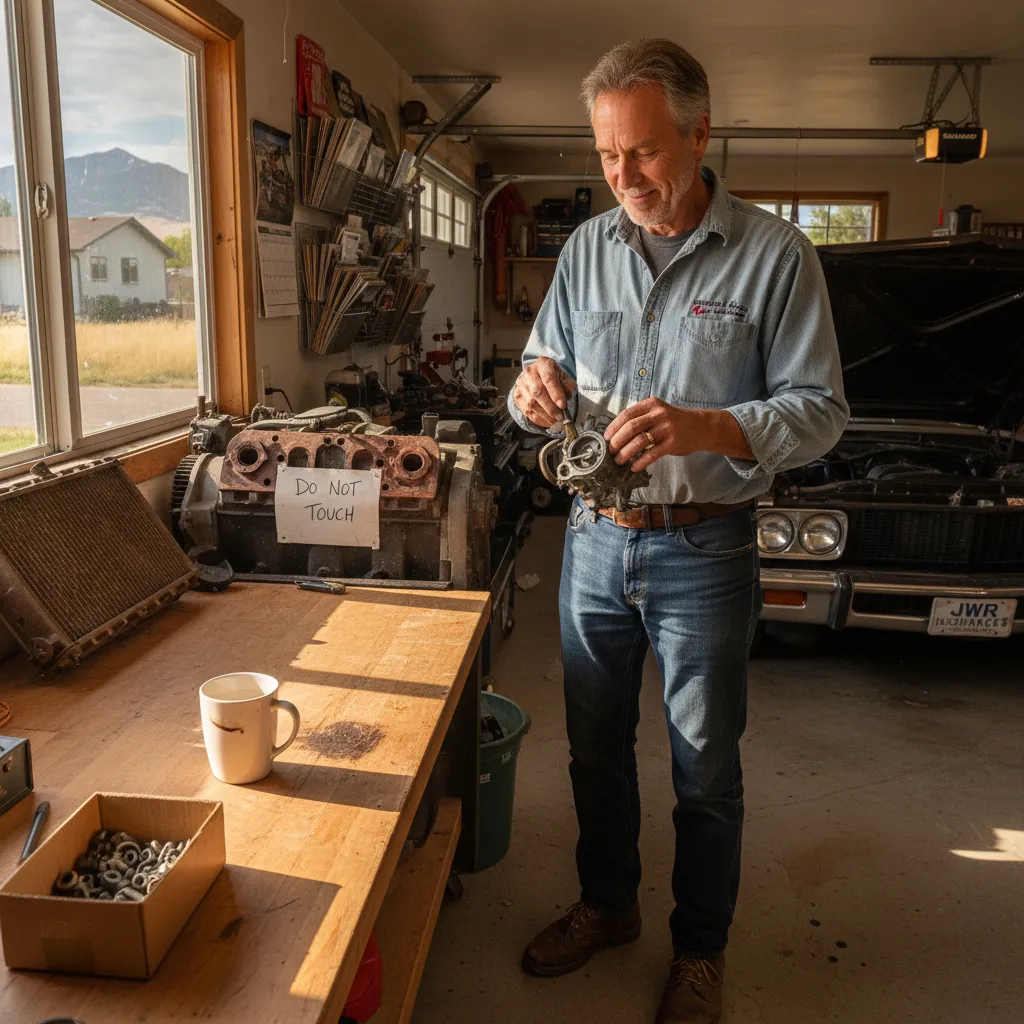
Documenting Your Parts Inventory for Insurance
Simple strategies for creating the documentation you'll need if claims occur—including photographing components from multiple angles with measurements or reference objects for scale, saving all receipts from parts purchases even at car shows or online, creating basic spreadsheets listing major components with acquisition dates and approximate values, and storing digital documentation in cloud services separate from your physical parts location. Learn which documentation specialized carriers actually require versus what standard insurance companies demand, and how proper inventory records dramatically accelerate claims processing and improve settlement outcomes when losses occur.

Blanket vs. Scheduled Coverage: Which Approach for Your Collection
Understanding when blanket coverage (one total limit for your entire parts collection) makes sense versus scheduling individual high-value items with specific limits—including the administrative tradeoffs of each approach, how carriers determine fair settlement under blanket versus scheduled arrangements, when hybrid approaches combining both methods provide optimal protection, and how to decide appropriate coverage levels based on your actual inventory value and acquisition patterns. Practical guidance for restorers at every collection level from casual hobbyists maintaining $2,000 in parts to serious collectors with $15,000+ inventories.
COVERAGE FOR EVERY RESTORATION STAGE
First Restoration Project
Just starting your first classic car restoration? You're probably maintaining a modest parts inventory—maybe a spare carburetor, some trim pieces, weatherstripping, and miscellaneous components totaling $1,000-$2,500—while you learn restoration techniques and identify what your project needs. We structure basic spare parts coverage (typically $500-$2,000) that protects your initial inventory affordably without paying for limits you don't yet need, with room to expand as you accumulate more components and your restoration progresses from planning to active work.
Active Serious Restorer
Deep into restoration work with substantial parts accumulation? You've likely built significant inventory—spare engines, transmissions, body panels, interior components, mechanical assemblies—totaling $5,000-$12,000 as you've opportunistically acquired components when available and accumulated what you need for complete restoration. We expand coverage to match your growing investment, structuring blanket coverage for diverse component collections, potentially scheduling major items like engines and transmissions individually, and ensuring your protection keeps pace with the parts inventory that serious restoration demands.
Multi-Vehicle Collector
Maintaining restoration projects for multiple classic vehicles simultaneously? You're managing complex parts inventory—components for different makes and models, shared parts that work across vehicles, major assemblies for each project—potentially $12,000-$20,000+ in total spare parts supporting your collection. We structure comprehensive coverage accounting for inventory distributed across multiple projects, coordinating protection for parts stored in various locations (home garage, storage units, workshop spaces), and ensuring limits accommodate the substantial investment serious multi-vehicle collectors maintain to support ongoing restoration work.
Specialized Collector Focus
Focused on specific makes, models, or restoration specialization with extensive parts inventory? You've built sophisticated collections—complete spare drivetrains, extensive trim and body panel inventories, specialized components for particular vehicle types—potentially $20,000+ in carefully curated parts representing years of targeted acquisition. We structure premium coverage with high blanket limits or extensive scheduled items lists, work with carriers whose adjusters understand specialized collector markets and rare component valuation, and ensure your focused expertise and substantial investment receive protection matching the scale and specificity of your collection.
FAQs
For classic car insurance, an appraisal determines your vehicle's "agreed value," which is the amount you’ll be paid if it's a total loss. You’ll usually need to submit photos, receipts for restorations, and sometimes a professional appraisal report. We're here to guide you through this process to ensure your classic, whether it's a vintage pickup from an oil field or a meticulously restored muscle car, is accurately valued and fully protected.
Yes, absolutely! Your standard auto policy may not adequately cover the true value of your classic vehicle, especially if it's appreciating. Classic car insurance offers agreed value coverage, which ensures you're paid the car's current market value without depreciation in case of a covered loss. Don't let a standard policy undervalue your unique ride; get a specialized classic car quote today.
The cost of classic car insurance depends on several factors, including your vehicle's agreed value, how and where it's stored, and your annual mileage. Unlike standard auto insurance, classic policies often have lower premiums because these cars are typically driven less and maintained meticulously. To get a precise quote tailored to your cherished classic, give us a call!
Classic car insurance typically excludes damage from everyday use, racing, or commercial purposes. It generally only covers the vehicle under specific conditions, like limited pleasure driving, exhibitions, and club events. Always review your policy for exact exclusions and discuss how you use your classic with your agent to ensure proper coverage.
Agreed Value coverage means you and the insurer agree on your car's value upfront, and you're guaranteed that amount if it’s totaled. Stated Value, however, means the insurer pays either the stated amount or the actual cash value (ACV) at the time of loss, whichever is less. For classics, especially those driven through Wyoming's changing weather, Agreed Value offers far greater peace of mind and protection, as it locks in your car's true worth, and we highly recommend it.
Classic car insurance offers specialized coverage designed for collector vehicles, including "agreed value" coverage, which guarantees you’ll receive the car’s full insured value in case of a total loss. It can also cover spare parts, roadside assistance specifically for classics in Wyoming, and even provide coverage if your car is at a show. This ensures your investment is protected far beyond a standard policy.