
UNINSURED MOTORIST COVERAGE FOR YOUR CLASSIC CAR
Classic cars face unique risks when hit by uninsured drivers—because 13-15% of drivers in Wyoming, Colorado, Utah, and Montana carry no insurance at all, and your collector vehicle's true value often far exceeds their minimal liability limits even if they are insured. As an independent brokerage serving Mountain West classic car enthusiasts, we compare 20+ specialty carriers to structure uninsured and underinsured motorist coverage that protects your restoration investment, irreplaceable value, and years of work—not just book value that ignores your sweat equity and impossible-to-replace components. We're local enthusiasts who understand classic car values, and we make sure your irreplaceable vehicle is protected when negligent drivers destroy what you've spent years building.

COMPREHENSIVE UNINSURED MOTORIST PROTECTION
Coverage that protects your irreplaceable classic when negligent drivers can't pay for the damage they cause

UNDERSTANDING CLASSIC CAR VULNERABILITY
Classic cars face a protection crisis that most collectors don't fully grasp until it's too late—when an uninsured driver runs a red light and totals your 1967 Mustang you've spent five years restoring, or an underinsured teenager rear-ends your pristine '57 Chevy and carries only Wyoming's minimum $25,000 liability coverage while your vehicle is worth $75,000, you discover that the at-fault driver's insurance (if they have any) is catastrophically inadequate to compensate you for what you've lost. Approximately 13-15% of drivers across America carry no liability insurance whatsoever, with some Mountain West areas experiencing rates over 20%, meaning statistically you face a one-in-seven chance that any accident involves a completely uninsured operator who has zero ability to pay for the irreplaceable classic car they just destroyed through their negligence. But the underinsured problem is even more widespread—the majority of insured drivers carry only state minimum liability limits ($25,000 per person in Wyoming, $25,000 in Colorado, $25,000 in Utah, $25,000 in Montana), which might adequately cover a 2015 Honda Civic but represents a fraction of what your classic car is worth when you factor in restoration costs, irreplaceable original components, your years of labor, and the reality that you can't just "buy another one" at any price. We structure uninsured and underinsured motorist coverage specifically calibrated to classic car values—using agreed value or stated amount endorsements that recognize your vehicle's true worth including restoration investment, protecting against both completely uninsured operators and the far more common scenario where the at-fault driver has insurance but their $25,000 liability limit doesn't come close to covering your $60,000 restoration, and ensuring you can actually replace or rebuild what negligent drivers destroy rather than absorbing tens of thousands in losses because someone else chose to drive uninsured or underinsured.
AGREED VALUE VERSUS ACTUAL CASH VALUE
The single most critical aspect of uninsured/underinsured motorist coverage for classic cars is how your vehicle's value is determined when a claim is paid—and here's where most classic car owners discover too late that their coverage structure leaves them financially devastated even with UM/UIM protection in place. Standard auto insurance UM/UIM policies calculate compensation based on "actual cash value"—essentially the fair market value of your vehicle at the time of the accident minus depreciation—which for classic cars creates an absurd and unjust outcome where the insurance company looks at 30-year-old vehicle pricing guides that show your 1969 Camaro is "worth" $35,000 based on average sale prices, completely ignoring that you've invested $65,000 in a frame-off restoration including new engine, custom paint, rebuilt transmission, and hundreds of hours of your labor installing components that aren't reflected in any pricing guide. When an uninsured driver totals that Camaro, your UM coverage pays $35,000 based on "actual cash value" even though you can't possibly replace or rebuild your vehicle for that amount, leaving you $30,000 short with no recourse against the uninsured driver who has no assets. Agreed value UM/UIM coverage solves this problem by establishing the vehicle's value at the time you purchase the policy—you and the insurance company agree that your classic is worth $65,000 based on appraisal, restoration receipts, and current market conditions, and that $65,000 becomes the amount your UM/UIM coverage will pay if an uninsured or underinsured driver totals your vehicle, regardless of what pricing guides or adjusters later claim the car was worth. We structure classic car UM/UIM coverage using agreed value or stated amount endorsements from specialty carriers who understand collector vehicles, ensuring your coverage limits actually match your vehicle's true replacement cost including restoration investment and impossible-to-replace original components, and making sure that when an uninsured driver destroys years of your work, you receive compensation that allows you to actually start over rather than absorbing catastrophic financial losses because someone else couldn't be bothered to carry adequate insurance. For classic car owners with multiple vehicles, we coordinate UM/UIM coverage across your entire collection, ensuring each vehicle has appropriate agreed value protection and your total UM/UIM limits are sufficient to cover a worst-case scenario where an uninsured driver causes an accident that damages multiple classics simultaneously.
Local expertise matters
Independent agency committed to providing transparent, straightforward insurance solutions for Wyoming and Northern Colorado residents.
REAL UNINSURED DRIVER RISKS, REAL PROTECTION
UM/UIM coverage that stands between negligent drivers and your irreplaceable classic car investment
When Uninsured Drivers Destroy Your Restoration
You're driving your 1970 Chevelle to a car show in Fort Collins—a vehicle you've spent six years restoring including frame sandblasting, complete drivetrain rebuild, custom interior work, and professional paint that alone cost $12,000—when an uninsured driver runs a stop sign and T-bones you at 45 mph, destroying the entire passenger side and likely totaling a classic you've valued at $68,000 based on recent appraisal and restoration receipts. The uninsured driver apologizes profusely but admits they let their insurance lapse three months ago, and while you can sue them personally for damages, they rent an apartment, work an hourly job, and have no meaningful assets to pay a judgment—meaning pursuing them in court would cost you thousands in legal fees to obtain a worthless judgment against someone who will never be able to pay. Without uninsured motorist coverage specifically structured for classic cars using agreed value, you're facing a catastrophic financial loss—your standard auto insurance UM/UIM policy (if you have one) might only pay "actual cash value" based on pricing guides that value 1970 Chevelles at $35,000-$40,000 for "average" condition, completely ignoring your frame-off restoration, documented investment, and the reality that you can't buy another numbers-matching Chevelle in this condition for anywhere near those pricing guide values. Many classic car owners discover too late that their auto insurance UM coverage excludes collector vehicles entirely, or caps UM/UIM benefits at levels far below their classic's true value, or uses actual cash value calculations that ignore restoration costs—leaving them to absorb $30,000-$50,000+ in losses because an uninsured driver chose to drive illegally and destroyed an irreplaceable vehicle. We structure uninsured motorist coverage specifically for classic cars with specialty carriers who use agreed value endorsements—you and the insurance company agree up front that your Chevelle is worth $68,000 based on appraisal and restoration documentation, and that becomes the amount your UM coverage pays if an uninsured driver totals it, regardless of what pricing guides claim or what standard adjusters think it's worth. For classic car owners, this means the difference between receiving compensation that allows you to find and purchase a comparable vehicle or start a new restoration project, versus being handed a check for $35,000 and told "that's what your 50-year-old car is worth" while you're left $33,000 short with no recourse.
When Minimum Liability Limits Don't Cover Your Classic
An 18-year-old driver rear-ends your pristine 1965 Ford Mustang convertible at a stoplight in Casper, pushing your classic into the intersection where it's struck by crossing traffic—resulting in catastrophic damage to front and rear ends, frame damage, destroyed original chrome bumpers that are impossible to replace, and damage to the original 289 engine and transmission that makes the vehicle likely uneconomical to repair given the extent of structural compromise. The teenage driver's parents carry auto insurance (thankfully), but Wyoming law only requires $25,000 per person liability coverage, and that's exactly what their policy provides—$25,000 to cover your vehicle damage and any injuries, despite the fact that your agreed value classic car policy values your Mustang at $72,000 based on its excellent original condition, matching numbers drivetrain, and documentation as a rust-free Western car with known ownership history. The teenager's insurance company pays their $25,000 policy limit promptly, but that leaves you $47,000 short—and while you could sue the teenager's parents personally for the remaining damages, they're middle-class working people who don't have $47,000 in available assets, meaning you'd spend years pursuing a judgment you'd likely never collect. This is exactly the scenario underinsured motorist coverage protects against—your own UIM coverage steps in to pay the $47,000 gap between the at-fault driver's inadequate $25,000 liability limit and your vehicle's actual $72,000 agreed value, ensuring you receive full compensation despite the at-fault party's decision to carry only minimum required coverage. Most classic car owners don't realize that state minimum liability limits ($25,000 in most Mountain West states) were set decades ago when vehicles cost far less and haven't kept pace with current classic car values—meaning the majority of drivers on the road carry liability coverage that's grossly inadequate to compensate you if they destroy your high-value collector vehicle. We structure underinsured motorist coverage for classic cars with limits that reflect your vehicle's true value—typically $50,000 to $150,000 or higher per vehicle depending on agreed value and collection size—ensuring that when someone with minimal liability insurance destroys your classic, you're not left absorbing tens of thousands in losses because state legislatures haven't updated insurance requirements in 30 years.
When Your Collection Grows Beyond Your Coverage
Over ten years you've built a three-vehicle classic car collection—starting with a 1972 Corvette Stingray valued at $45,000, adding a 1956 Chevrolet Bel Air valued at $52,000, and recently completing restoration on a 1969 Dodge Charger you've brought to $78,000 in value including performance upgrades and professional paint—but your uninsured/underinsured motorist coverage limits are still the $50,000 per accident you purchased when you owned just the Corvette, creating a massive coverage gap you haven't recognized. An uninsured driver causes a multi-vehicle accident that damages both your Charger (parked at a car show) and your Bel Air (being loaded onto a trailer), with total damage to both vehicles estimated at $95,000 including repair costs or total loss settlements—but your UM coverage only provides $50,000 per accident total, leaving you $45,000 short even though you're the innocent victim of an uninsured driver's negligence. Classic car collections require continuous coverage review as values increase through completed restorations, market appreciation, and acquisition of additional vehicles—but many collectors purchase coverage once and never revisit it, discovering only after a claim that their UM/UIM limits were adequate when they owned one $40,000 classic but are catastrophically insufficient now that they own three vehicles totaling $175,000 in agreed value. The "per accident" limit on UM/UIM coverage becomes critical when multiple vehicles are damaged simultaneously—in accidents at car shows, during transport on trailers, or in garage fires where multiple classics are stored together—but collectors often focus only on "per vehicle" agreed value without ensuring their UM/UIM per-accident limit covers total collection exposure. We proactively review classic car UM/UIM coverage as your collection evolves—recommending coverage limit increases when completed restorations increase individual vehicle values beyond original agreed amounts, ensuring newly acquired vehicles are immediately added with appropriate UM/UIM protection, verifying that per-accident UM/UIM limits cover worst-case scenarios where multiple vehicles could be damaged simultaneously, and structuring coverage that grows with your collection rather than leaving you underinsured as your investment increases. For serious collectors with multiple high-value vehicles, we often recommend UM/UIM limits of $250,000 to $500,000 or more per accident to ensure adequate protection across the entire collection, not just individual vehicles.
When Claims Get Complicated With Specialty Vehicles
Your 1963 split-window Corvette is totaled by an uninsured driver, you file a UM claim with your insurance company expecting to receive your $125,000 agreed value, but the insurance company's adjuster—accustomed to standard auto claims—begins disputing your vehicle's value, questioning whether the agreed value endorsement really means they have to pay the full amount without investigating current market conditions, and suggesting that comparable Corvettes are selling for less than your agreed value and therefore your claim should be reduced. Classic car UM/UIM claims involve complexities that standard auto adjusters frequently mishandle—disputes about whether agreed value really means "agreed" or whether the company can still investigate and dispute value at claim time, questions about whether your vehicle's originality, condition, or provenance justifies the agreed value you're claiming, disagreements about repair costs when damage isn't a total loss (because classic car restoration labor rates far exceed standard collision shop rates), and confusion about diminished value when a repairable classic car's market value is permanently reduced by accident history even after proper repairs. Without an insurance agent who specializes in classic cars and can advocate effectively during the claims process, collectors often face drawn-out claim disputes where insurance companies use standard auto claim procedures that are completely inappropriate for collector vehicles—hiring adjusters unfamiliar with classic car valuation, referencing pricing guides designed for standard used cars not restored classics, attempting to steer repairs to standard collision shops that lack expertise in vintage vehicle restoration, or offering settlements that don't account for the impossibility of replacing original components or finding comparable replacement vehicles in the current market. We advocate for you throughout classic car UM/UIM claims—immediately providing the insurance company with all documentation supporting your agreed value (appraisals, restoration receipts, provenance records, comparable sales data), connecting adjusters with reputable classic car appraisers who can validate your vehicle's value using appropriate collector car methods not standard auto valuation, recommending qualified restoration shops when repairs are possible and ensuring the insurance company pays appropriate specialty labor rates, and escalating disputes to supervisors or specialty claim departments when standard adjusters are mishandling collector vehicle claims. For a disputed $125,000 claim, having an agent who knows classic car insurance and speaks the language of collector vehicle valuation can mean the difference between a $125,000 settlement that makes you whole versus a $75,000 offer based on inappropriate valuation methods—a $50,000 difference that far exceeds any insurance premium considerations. Our goal is ensuring that agreed value means agreed value, that specialty vehicle claims are handled by people who understand classic cars, and that you receive the full protection you paid for when negligent uninsured or underinsured drivers destroy what you've spent years building.
CLASSIC CAR INSURANCE INSIGHTS THAT MATTER
Essential knowledge for protecting your collector vehicle investment
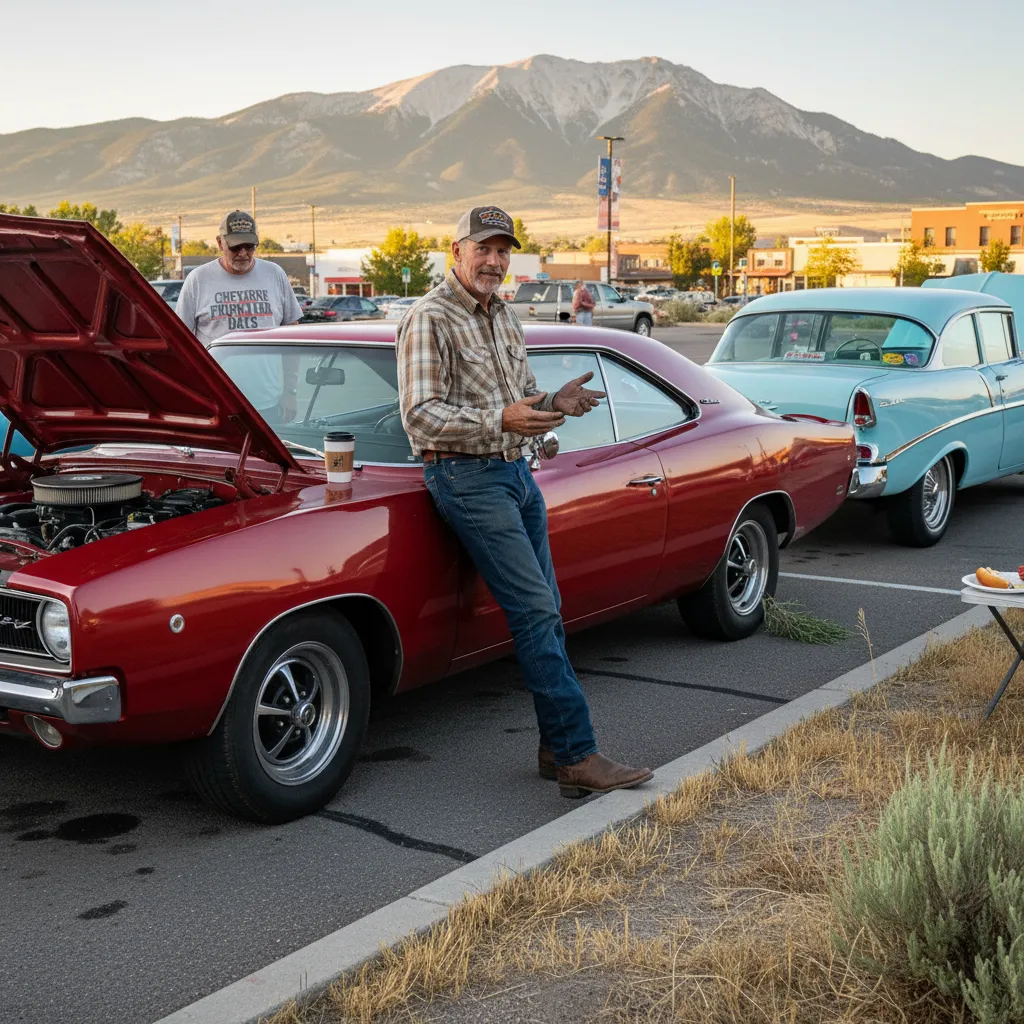
Understanding Agreed Value vs. Stated Amount Coverage
The critical difference between agreed value and stated amount coverage for classic car UM/UIM protection—including why agreed value provides superior protection, how carriers determine whether your classic qualifies for agreed value endorsements, what documentation you need to establish appropriate values, and how to ensure your UM/UIM coverage uses the same valuation method as your physical damage coverage to avoid gaps in protection.

When Your Auto Policy UM/UIM Doesn't Cover Classics
Why standard personal auto insurance uninsured motorist coverage often excludes collector vehicles or caps UM/UIM benefits far below classic car values—covering how to review your current coverage for classic car exclusions, when you need dedicated classic car insurance with specialty UM/UIM coverage, and how to coordinate coverage if you have multiple policies to ensure no gaps exist when uninsured drivers cause accidents involving your collector vehicles.
COVERAGE FOR EVERY COLLECTOR STAGE
First Classic Owner
Just purchased your first classic car? Your priority is establishing agreed value coverage and ensuring adequate UM/UIM protection for a vehicle whose true worth far exceeds what at-fault drivers typically carry in liability insurance. We structure essential UM/UIM coverage appropriate for your vehicle's current value with room to increase limits as you complete restoration work and your classic's value grows beyond its initial purchase price.
Active Collector
Building your collection with multiple classics in various stages of restoration? You're increasing both vehicle values through restoration work and total collection value through acquisitions—requiring continuous UM/UIM coverage updates. We expand UM/UIM limits to match your growing collection value, ensure newly acquired vehicles are immediately covered, and adjust individual vehicle agreed values as you complete restorations that substantially increase worth.
Established Collection
Own multiple high-value classics totaling $300,000+ in agreed value? You're managing significant investment requiring sophisticated UM/UIM protection across your entire collection. We structure comprehensive UM/UIM coverage with per-accident limits that protect against worst-case scenarios involving multiple vehicles, coordinate coverage across different carriers if you use multiple policies, and ensure your total protection matches your collection's substantial worth.
Legacy Planning Collector
Preparing to pass your collection to heirs or considering downsizing? Your insurance needs are transitioning as collection composition changes and ownership transfers. We help restructure UM/UIM coverage as you sell vehicles or transfer ownership to family members, ensure heirs have appropriate coverage when they inherit classics, and coordinate coverage transitions that protect your legacy collection throughout ownership changes.
FAQs
Agreed Value coverage means you and the insurer agree on your car's value upfront, and you're guaranteed that amount if it’s totaled. Stated Value, however, means the insurer pays either the stated amount or the actual cash value (ACV) at the time of loss, whichever is less. For classics, especially those driven through Wyoming's changing weather, Agreed Value offers far greater peace of mind and protection, as it locks in your car's true worth, and we highly recommend it.
Classic car insurance offers specialized coverage designed for collector vehicles, including "agreed value" coverage, which guarantees you’ll receive the car’s full insured value in case of a total loss. It can also cover spare parts, roadside assistance specifically for classics in Wyoming, and even provide coverage if your car is at a show. This ensures your investment is protected far beyond a standard policy.
Yes, absolutely! Your standard auto policy may not adequately cover the true value of your classic vehicle, especially if it's appreciating. Classic car insurance offers agreed value coverage, which ensures you're paid the car's current market value without depreciation in case of a covered loss. Don't let a standard policy undervalue your unique ride; get a specialized classic car quote today.
Classic car insurance typically excludes damage from everyday use, racing, or commercial purposes. It generally only covers the vehicle under specific conditions, like limited pleasure driving, exhibitions, and club events. Always review your policy for exact exclusions and discuss how you use your classic with your agent to ensure proper coverage.
For classic car insurance, an appraisal determines your vehicle's "agreed value," which is the amount you’ll be paid if it's a total loss. You’ll usually need to submit photos, receipts for restorations, and sometimes a professional appraisal report. We're here to guide you through this process to ensure your classic, whether it's a vintage pickup from an oil field or a meticulously restored muscle car, is accurately valued and fully protected.
The cost of classic car insurance depends on several factors, including your vehicle's agreed value, how and where it's stored, and your annual mileage. Unlike standard auto insurance, classic policies often have lower premiums because these cars are typically driven less and maintained meticulously. To get a precise quote tailored to your cherished classic, give us a call!