
FLAT TIRE ROADSIDE ASSISTANCE THAT KEEPS YOU MOVING
Mountain West drivers face flat tire risks every day—from nail-strewn construction zones in Fort Collins to sharp rock debris on Wyoming highways after spring snowmelt, from extreme temperature swings that stress tire sidewalls at altitude to remote mountain passes where a flat tire 60 miles from the nearest town becomes a genuine safety emergency. As an independent brokerage serving Wyoming, Colorado, Utah, and Montana, we compare 20+ carriers to find flat tire roadside assistance that actually reaches you when you're stranded—with response times, towing distances, and service networks built for Mountain West roads, not just suburban parking lots. We're locals who've changed tires in subzero wind on I-80 and waited for help on remote passes ourselves, and we make sure your roadside coverage works when you actually need it.
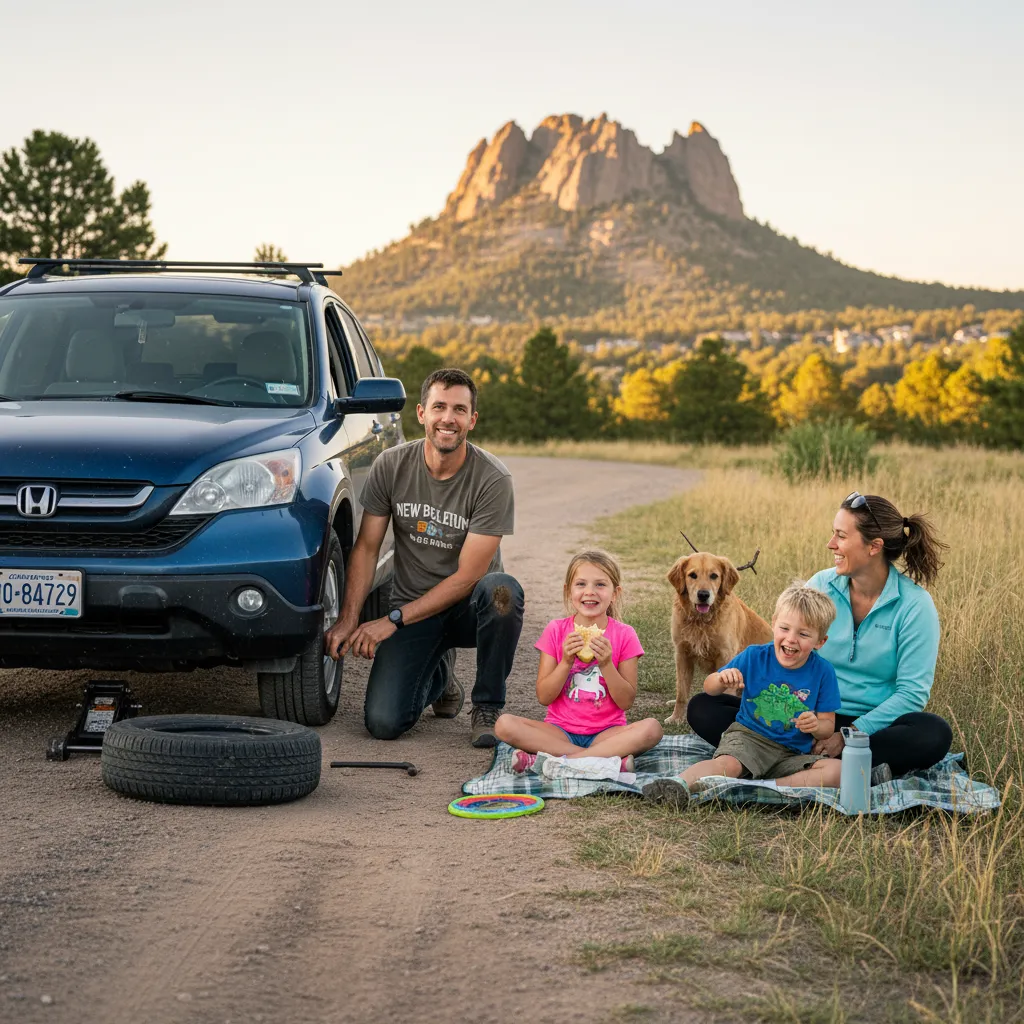
COMPREHENSIVE FLAT TIRE ROADSIDE PROTECTION
Coverage solutions designed for drivers who face Mountain West road conditions and distances

UNDERSTANDING MOUNTAIN WEST ROAD RISKS
Mountain West highways create flat tire scenarios most national roadside assistance programs don't anticipate—spring snowmelt washing rocks and debris onto I-70 between Morrison and Vail where nail and puncture hazards appear daily during runoff season, extreme temperature swings from subzero nights to warm afternoons at altitude that stress tire sidewalls and accelerate rubber degradation, construction zones throughout the Northern Colorado corridor where roofing nails and metal scraps litter shoulders, and remote Wyoming highways like US-287 or US-191 where the nearest tire shop can be genuinely 80+ miles away from breakdown locations. These aren't theoretical concerns—Colorado's CDOT Safety Patrol responds to over 40,000 roadside assistance calls annually with flat tires consistently ranking among the top three reasons motorists need help, and Wyoming's vast distances mean a flat tire on the drive between Rock Springs and Casper can leave you stranded for hours without proper coverage that reaches remote locations. We structure flat tire roadside assistance specifically for Mountain West driving realities, partnering with carriers whose service networks include contracted providers positioned along major corridors and remote highways—not just urban areas—and whose towing distance parameters accommodate the genuine distances between breakdown locations and repair facilities in Wyoming, Colorado, Utah, and Montana. Unlike generic national programs designed for suburban commuters where help is 15 minutes away, we ensure your coverage includes extended service radius appropriate for mountain passes and rural highways, contracted providers experienced with Mountain West weather conditions and terrain challenges, and realistic towing distances that don't leave you paying hundreds out-of-pocket when the nearest tire shop is 50 miles from where your tire blew.
COVERAGE ADAPTED TO YOUR DRIVING
Generic roadside assistance treats all drivers the same, but a Fort Collins professional commuting 15 miles daily on I-25 needs completely different flat tire coverage than a Wyoming oil field worker driving 200+ miles weekly on remote highways between Casper and Gillette—and neither should pay for coverage irrelevant to their actual driving patterns or be left exposed when standard plans don't cover their real-world scenarios. We customize flat tire roadside assistance by analyzing your specific driving profile: your typical driving distances and routes (urban commuting versus rural highway travel versus mountain pass crossings), the remoteness of areas you regularly drive (major interstates with dense service networks versus two-lane highways 50+ miles between towns), your vehicle type and tire vulnerability (compact cars on low-profile performance tires versus trucks on all-terrain tires with different puncture resistance), whether you maintain a functioning spare tire or drive vehicles without spares (many modern vehicles eliminate spare tires entirely, requiring towing for every flat), and how frequently you travel outside your home region where your primary carrier's service network may be limited. For example, we might recommend premium-tier coverage with 100-mile towing radius for a client regularly driving between Casper and Denver who faces genuine risk of flats in remote areas where towing 50+ miles to repair facilities is realistic, basic coverage with 10-15 mile towing for urban Fort Collins drivers who'll never be more than 20 minutes from multiple tire shops, and specialized coverage that includes spare tire delivery service for drivers operating vehicles without spare tires who face mandatory towing for every flat tire incident regardless of location. The result is flat tire coverage calibrated to YOUR actual driving exposure—not generic national coverage that either leaves you exposed on remote highways or makes you overpay for towing distance you'll never need because you only drive in town.
Local expertise matters
Independent agency committed to providing transparent, straightforward insurance solutions for Wyoming and Northern Colorado residents.
REAL FLAT TIRE RISKS, REAL SOLUTIONS
Roadside assistance that stands between flat tires and hours stranded on Mountain West highways
When Flats Happen on Remote Highways
You're driving southbound on US-287 between Laramie and Walden, Colorado—a 60-mile stretch with virtually no services or towns—when you hear the unmistakable thump-thump-thump of a flat tire, forcing you to pull onto a narrow shoulder with sagebrush stretching to the horizon in every direction and no cell service to call for help. Without roadside assistance, you face attempting a tire change yourself in potentially dangerous weather conditions (Wyoming wind, summer heat, winter cold), hiking toward the nearest location where you might find cell service (potentially 10+ miles), waiting hours for a passing motorist willing to stop and help, or eventually getting through to a commercial towing service that charges $150 base rate plus $4 per mile for the 45-mile tow to the nearest tire shop in Walden—meaning total out-of-pocket costs of $330+ just for towing before you even purchase a replacement tire. Many drivers discover their basic roadside assistance has a 10-mile towing limit that seemed adequate when purchased but now leaves them paying $140+ out-of-pocket for the additional 35 miles beyond coverage, or their carrier's "nationwide service network" doesn't actually include contracted providers serving remote Wyoming highways, forcing them to wait 3+ hours for the nearest available tow truck to drive from Laramie. We structure flat tire roadside assistance with extended towing radius appropriate for Mountain West driving (typically 50-100 miles rather than basic 10-mile limits), carriers whose service networks specifically include contracted providers along major remote corridors like US-287, US-191, and US-26 in Wyoming or US-160 and US-550 in Colorado, and realistic response time expectations that account for genuine distances in rural regions—ensuring flat tires on remote highways become manageable inconveniences involving a phone call and a wait rather than multi-hour ordeals involving hiking, massive out-of-pocket costs, or genuine safety concerns when weather conditions make roadside waiting dangerous.
When Your Vehicle Has No Spare Tire
You're driving your 2022 compact sedan on I-25 through Fort Collins when you run over construction debris and immediately feel your right front tire deflate, pulling safely to the shoulder before realizing your vehicle—like many modern cars—came from the factory with a tire inflator kit instead of a spare tire, meaning there's literally no way to get your vehicle moving again without a tow truck regardless of how minor the puncture might be. This scenario, increasingly common as manufacturers eliminate spare tires to reduce vehicle weight and improve fuel economy, transforms every flat tire from a 15-minute roadside tire change into a mandatory towing situation requiring transport to a tire repair shop—and without proper roadside assistance, you're looking at $75-125 for a standard tow truck service call plus potential per-mile charges if the nearest tire shop exceeds the towing company's included radius, meaning a simple puncture that could be plugged for $25 at a shop now costs $100-150 total because towing is unavoidable. Many drivers don't realize their basic roadside assistance includes tire change service "when spare is available" but provides limited or no towing coverage, leaving them with inadequate protection when their vehicle's design makes towing the only option, or their coverage has a 5-mile towing limit that doesn't reach from highway breakdown locations to the nearest tire repair facility even in urban areas. We identify vehicles without spare tires during coverage reviews and ensure appropriate towing coverage that accommodates mandatory transport to repair facilities, typically recommending 15-25 mile towing minimums for urban/suburban drivers whose vehicles lack spares (covering the realistic distance from any I-25 breakdown location to Northern Colorado tire shops) and extended towing for those regularly traveling beyond urban areas—turning an expensive surprise into covered protection when your vehicle's design makes every flat tire a towing scenario regardless of how repairable the actual tire damage might be.
When Flats Happen During Road Trips
You're driving from Casper to Denver for a wedding—a 250-mile trip you make a few times annually—when a tire blows on I-25 south of Cheyenne, and while your daily-driver roadside assistance seemed adequate for around-town emergencies, you're now discovering that response times are 90+ minutes because you're outside your carrier's primary service territory and they're dispatching from unfamiliar providers, the nearest tire shop that can accommodate your vehicle's tire size is in Fort Collins 40 miles away (exceeding your 25-mile towing limit and requiring $60 out-of-pocket for additional mileage), and you're now missing the wedding ceremony you traveled specifically to attend. Road trip flat tires expose coverage gaps that never matter during routine local driving—your carrier's service network density drops dramatically outside your home region (what takes 30 minutes in Casper takes 2 hours in southern Wyoming where contracted providers are sparse), towing distance limits that work fine for local emergencies become inadequate when you're between cities and the "nearest qualified repair facility" means 40-60 miles not 8 miles, and the financial and schedule consequences escalate when you're traveling for time-sensitive events or have hotel reservations and rental car pickups you're now missing. Many drivers maintain roadside assistance appropriate for their daily 10-mile commute but never consider whether that same coverage protects them during the 3-4 annual road trips where they're genuinely at risk of remote breakdowns far from home, discovering only during emergencies that their coverage leaves them paying hundreds out-of-pocket and waiting hours for help in unfamiliar regions. We review clients' road trip patterns during coverage planning—asking about annual travel to Denver, Salt Lake, Billings, or other regional destinations outside daily driving areas—and recommend coverage tiers that protect both routine local emergencies AND the road trip scenarios where inadequate coverage creates the biggest financial and practical problems, typically suggesting premium coverage with 100-mile towing for clients making frequent interstate trips through Wyoming, Colorado, or Utah where distances between services genuinely require extended protection.
When Weather Complicates Response
Your tire goes flat on I-80 between Rawlins and Rock Springs during a January blizzard with visibility under a quarter mile, temperatures at -15°F, and wind chills making roadside waiting genuinely dangerous—you call your roadside assistance provider who confirms dispatch but warns that response times are extended to 2+ hours due to weather conditions slowing tow truck travel, and you're now facing a decision about whether to wait in your vehicle running the heater (burning fuel you might need) or risk hypothermia waiting in brutal conditions that make even 30 minutes outside genuinely life-threatening. Winter weather fundamentally changes flat tire emergencies in the Mountain West, transforming routine inconveniences into potential safety crises where response time directly impacts your physical safety, not just your schedule, and where commercial towing services often refuse dispatch entirely when conditions exceed safe operating parameters—leaving you stranded until weather improves unless your roadside assistance carrier maintains sufficient provider networks and dispatch priority to ensure response even in challenging conditions. Without strong roadside assistance, drivers face impossible choices during winter flat tires: attempting DIY tire changes in subzero temperatures and high wind where frostbite risk is real and physical capability is compromised by cold, waiting hours in vehicles while burning precious fuel hoping help arrives before you run out of gas, or making dangerous decisions to drive on flat tires to reach services because waiting isn't safe—and then discovering insurance won't cover the wheel damage caused by driving on deflated tires because you "failed to protect the property." We structure flat tire coverage with carriers who maintain robust Mountain West provider networks that reliably respond during winter weather conditions (not providers who promise coverage but rarely dispatch when weather is difficult), whose contracted towing services are equipped for winter operations and actually accept dispatch during storms rather than refusing service, and whose policies include reasonable provisions for emergency situations where driving on flat tires briefly to reach safe waiting locations doesn't void coverage—ensuring winter flat tires on Wyoming or Colorado highways are handled professionally with realistic response expectations rather than leaving you making dangerous choices because your "roadside assistance" doesn't actually assist when weather makes help most critical.
ROADSIDE ASSISTANCE INSIGHTS THAT MATTER
Practical knowledge to guide your flat tire coverage decisions

What to Keep in Your Vehicle for Flat Tire Emergencies
Essential supplies and equipment that make flat tire situations safer and easier to manage while waiting for roadside assistance—including emergency reflectors and road flares for visibility, basic tire repair kits that can temporarily seal small punctures, portable tire inflators that run off your 12-volt outlet, emergency blankets and supplies for winter breakdowns when waiting times extend beyond comfort, and communication backup plans (portable phone chargers, emergency contact information) for areas with limited cell service common throughout Mountain West rural highways.
Understanding Roadside Assistance Towing Distance Limits
Why towing distance parameters matter dramatically more in the Mountain West than other regions, how to evaluate whether 10-mile, 50-mile, or 100-mile towing limits are appropriate for your actual driving patterns, what happens when breakdown-to-repair-facility distances exceed your coverage limits and how much you'll pay out-of-pocket, and strategies for matching towing coverage to your regular routes—particularly for drivers commuting through remote areas or making frequent road trips between Wyoming, Colorado, or Utah population centers where distances between services can easily exceed basic coverage parameters.
COVERAGE FOR EVERY DRIVING STAGE
New Independent Driver
Just starting to drive on your own or bought your first vehicle? Your priority is basic flat tire protection for routine local driving—commuting to work or school within your home area, occasional drives to nearby cities, and building the confidence to handle vehicle emergencies. We structure affordable roadside assistance focused on essential flat tire and basic emergency coverage (jump-starts, lockouts) with modest towing distances appropriate for urban and suburban driving, giving you reliable help when emergencies happen without paying for extended coverage you don't yet need as you build driving experience and confidence.
Growing Family
Taking regular family road trips now? You're likely traveling between cities for activities and events, driving to visit family across state lines, taking kids to mountain recreation areas, and your flat tire exposure has expanded from local errands to genuine highway travel where remote breakdowns become realistic concerns. We expand roadside assistance to include extended towing distances that protect during interstate travel (50-100 miles rather than basic 10-15 mile limits), ensure coverage applies across all family vehicles including the older car your teenager now drives, and structure protection that keeps family trips moving when flat tires happen far from home—turning potential vacation disasters into manageable delays.
Established Multi-Vehicle Household
Managing multiple vehicles for work, family, and recreation? You're maintaining several vehicles with different tire sizes and spare tire situations, possibly including a truck or SUV for mountain access and recreation, and your household's total driving exposure spans urban commuting, remote work travel, and recreational trips where appropriate coverage across all vehicles and drivers matters. We structure comprehensive household roadside assistance that covers all family vehicles and all licensed household drivers regardless of which vehicle they're operating (important when kids drive different family cars or you drive a spouse's vehicle), ensure each vehicle has appropriate coverage for its typical use pattern, and optimize costs through membership options that provide household coverage more economically than insuring each vehicle separately.
Retirement Transition
Traveling more during retirement or splitting time between locations? You're likely taking extended road trips to visit family and explore regions you didn't have time for during working years, possibly maintaining a winter home in southern Utah or Arizona and making seasonal drives between residences, and your flat tire risks now involve extended time on unfamiliar highways far from your primary service providers. We adjust roadside assistance for retirement driving patterns—ensuring coverage works seamlessly across multiple states where you're now spending significant time, structuring extended towing appropriate for long-distance travel between seasonal residences, and potentially adding RV roadside coverage if you've transitioned to RV travel—protecting your retirement mobility when vehicle emergencies happen far from home and familiar support networks.
FAQs
Response times can vary based on location and time of day, but providers aim for 30-60 minutes in populated areas. In more remote parts of Wyoming or Colorado, it might take a bit longer, but help is dispatched immediately.
Roadside assistance is usually an affordable add-on, often costing less than $5-10 per month. This can save you hundreds on unexpected towing or repair calls, especially driving through rural Wyoming or Colorado.
Basic plans cover essential services with mileage limits for towing. Premium plans often include extended towing distances, winching service, trip interruption benefits, and sometimes even rental car reimbursement, offering broader protection for longer trips across the Rockies.