
JUMP-START ASSISTANCE THAT GETS YOU BACK ON THE ROAD FAST
When your battery dies in a Wyoming parking lot at -20°F or you're stranded after leaving your lights on overnight, you need help that arrives in thirty minutes—not a three-hour wait for a tow truck charging $400 for a simple jump. As an independent brokerage serving Wyoming, Colorado, Utah, and Montana, we compare 20+ carriers to find jump-start assistance that delivers professional technicians to your location fast—whether you're at home, at work, or on the road—with no surprise costs when you need help most. We're locals who've been stranded in Mountain West winters ourselves, and we make sure you're never stuck helpless when a dead battery threatens your day.
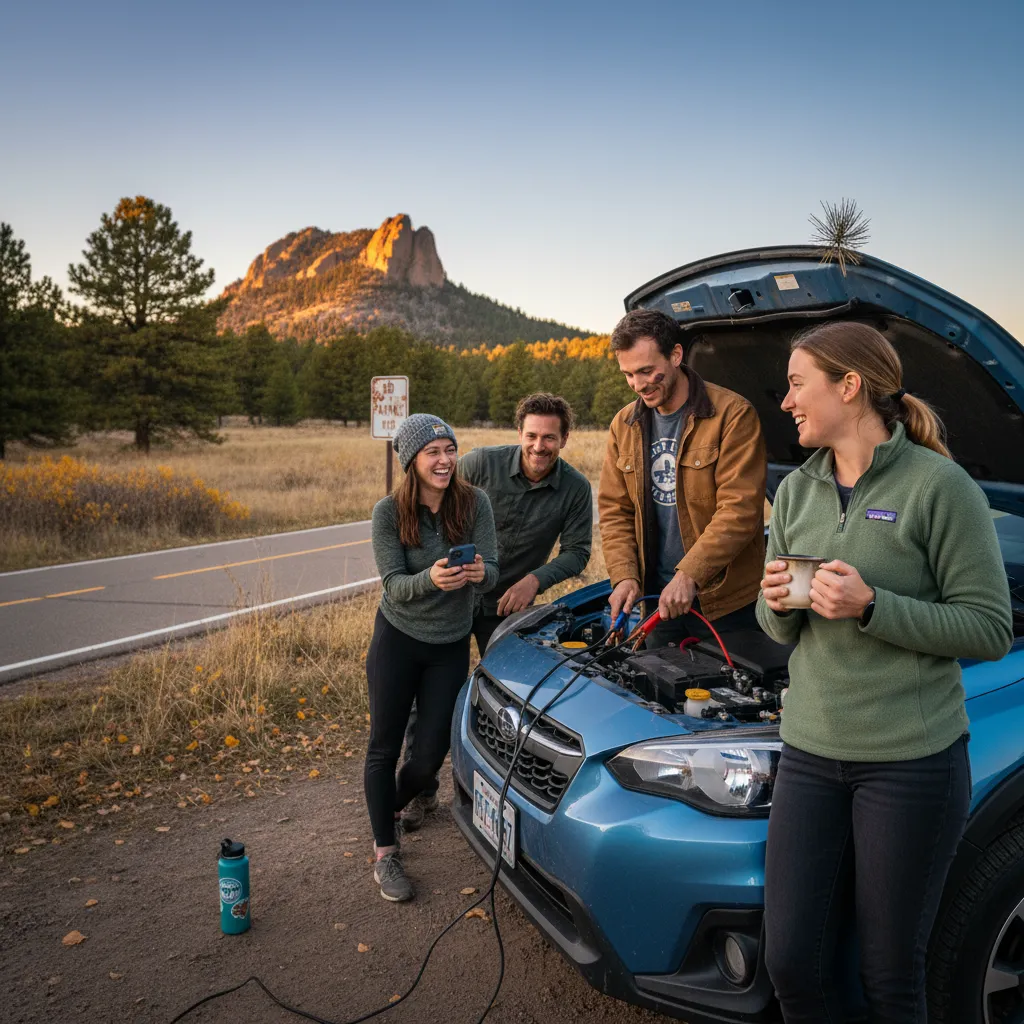
COMPREHENSIVE JUMP-START PROTECTION
Roadside battery assistance designed for Mountain West drivers who need reliable help fast

UNDERSTANDING MOUNTAIN WEST BATTERY RISKS
Wyoming and Colorado winters create the perfect storm for dead batteries—temperatures plummeting to -30°F reduce battery capacity by up to fifty percent while simultaneously increasing the power needed to crank cold engines, leaving even relatively new batteries unable to start vehicles on brutal winter mornings. We've handled hundreds of jump-start calls where drivers discovered their three-year-old battery simply couldn't deliver enough power in subzero temperatures, where vehicles sat unused during holiday periods and self-discharged in the cold, where commuters left interior lights on overnight and returned to completely dead electrical systems, and where aging batteries that worked fine in September failed catastrophically by December when cold stress revealed their declining capacity. These aren't theoretical risks in temperate climates—in Casper, Rock Springs, Fort Collins, and across the Mountain West, dead batteries represent the single most common vehicle emergency from November through February, stranding drivers in parking lots, at work sites, outside schools picking up kids, and in driveways trying to leave for work. We structure jump-start assistance that recognizes Mountain West battery failure patterns aren't occasional inconveniences but predictable seasonal risks requiring professional response—not hoping a neighbor has jumper cables or paying commercial tow services $300-500 for a fifteen-minute jump that should cost a fraction of that amount.
CUSTOMIZED RESPONSE FOR YOUR SITUATION
Generic roadside assistance programs treat all battery failures the same, but a driver stranded in a downtown Fort Collins parking garage needs different response logistics than a rancher whose truck won't start thirty miles outside Rock Springs on a county road—and a commuter stuck at their workplace after hours faces different urgency than someone at home with alternative transportation options. We customize jump-start assistance by analyzing your specific driving patterns and risk profile: where you typically drive and park (urban parking structures versus rural ranch access roads versus suburban neighborhoods), your vehicle age and battery condition (newer vehicles with relatively fresh batteries versus ten-year-old trucks with original batteries nearing end-of-life), your daily schedule and backup options (can you get kids from school or reach work without your primary vehicle), whether you have multiple drivers in your household who might be stranded separately, and seasonal patterns like extended parking during vacations when batteries self-discharge. For example, we might recommend comprehensive roadside bundles including jump-start for rural drivers who face isolation when stranded and can't easily get help from neighbors or passing motorists, priority response upgrades for single parents who must reach children reliably, and basic jump-start coverage for urban drivers with nearby alternatives and easier access to help—while ensuring coverage works at home, work, and on the road, not just traditional "roadside" breakdowns. The result is jump-start protection matched to YOUR actual risk profile and urgency needs, not generic coverage that either over-protects urban drivers or under-protects rural families who face genuine isolation when batteries fail far from help.
Local expertise matters
Independent agency committed to providing transparent, straightforward insurance solutions for Wyoming and Northern Colorado residents.
REAL BATTERY FAILURES, REAL SOLUTIONS
Jump-start assistance that stands between dead batteries and wasted days
When Winter Cold Kills Your Battery
It's January in Casper, temperatures hit -25°F overnight, and when you head out to your car at 6:30 AM for work, you turn the key and hear nothing—no cranking, no clicking, just dead silence because your five-year-old battery simply cannot deliver enough power in extreme cold to turn over the frozen engine. Dead batteries from cold weather represent the most common vehicle emergency in Wyoming and Colorado winters, affecting even relatively well-maintained vehicles when temperatures drop into extreme ranges, and without jump-start assistance you're facing an impossible situation: it's subzero outside so you can't wait long for help, you might not have neighbors available at early morning hours to provide jumper cables, calling a commercial tow service will cost $300-400 for a simple fifteen-minute jump-start because they know you're desperate, and you're already late for work with no good alternatives. Many drivers discover too late that their basic auto insurance doesn't include jump-start assistance or that the roadside coverage they thought they had excludes service at home (only covering "roadside" breakdowns), leaving them stranded in their own driveway with no coverage and facing expensive out-of-pocket costs for emergency help. We structure jump-start assistance that specifically covers home, work, and road locations—because batteries don't only fail on highways—with local provider networks that dispatch technicians carrying professional portable jump boxes within twenty to thirty-five minutes in Wyoming and Colorado service areas, getting you back on the road and to work with minimal delay and zero surprise costs, transforming what would be a catastrophic morning into a manageable inconvenience resolved by one phone call to us.
When You Leave Your Lights On Overnight
You're at a shopping center or workplace, you accidentally leave your interior dome light on or don't fully close a door so the courtesy lights stay illuminated, and eight hours later you return to discover your battery is completely drained—your vehicle won't start, won't even turn over, and you're stuck in a parking lot or parking structure with darkness approaching and evening temperatures dropping. This scenario happens constantly across all age groups and vehicle types—modern vehicles with multiple electrical accessories make it easy to inadvertently leave something drawing power, and even a small dome light can fully discharge a battery over several hours—but drivers without jump-start assistance face either begging strangers in parking lots for jumper cables (increasingly rare as people avoid roadside interactions), calling friends or family to drive across town to help (imposing on their time and requiring them to have cables), or paying commercial services $200-400 for what should be a quick ten-minute jump. Many drivers in this situation waste two to three hours trying to coordinate help, missing evening obligations like picking up kids from activities or getting home for dinner, and experiencing significant stress and frustration over what is mechanically a simple problem requiring only professional equipment and fifteen minutes of technician time. We structure jump-start assistance with unlimited annual service calls (no counting how many times you can use it, because accidents happen and batteries fail unpredictably), coverage at any location including parking lots and garages where you actually park, and rapid response from local technicians who arrive with portable jump boxes and get your vehicle restarted quickly—eliminating the wasted hours, the stress of coordinating informal help, and the financial hit of paying commercial rates during emergency situations when you have no alternatives or negotiating power.
When Your Battery Ages Out
Your vehicle has been reliable for years, you've never had battery problems, but suddenly over the course of a few weeks your vehicle becomes harder to start—the engine cranks sluggishly, you notice dimming lights when starting, and then one morning it simply won't start at all because your battery has reached end-of-life and no longer holds sufficient charge, a progression that happens to every vehicle battery eventually after three to five years. Battery aging failures often catch drivers by surprise because the decline happens gradually until sudden failure, and when it happens you're facing not just an immediate jump-start need but also a permanent battery replacement requirement—the technician can jump your vehicle to get it running temporarily, but you'll need a new battery installed within days or you'll be stranded again as soon as you turn the engine off. Without jump-start assistance that includes provider coordination, you're stuck managing multiple service calls: first getting someone to jump your dead battery, then driving immediately to an auto parts store or mechanic hoping they have your battery in stock, then either installing it yourself (requiring tools and knowledge) or paying installation labor, all while trying not to turn off your engine because you're running on a failing battery that might not restart. Many drivers in this situation make expensive mistakes—buying overpriced batteries at the first place they find rather than shopping around, paying excessive installation labor because they feel trapped, or driving too long on a failing battery and getting stranded again in worse locations. We structure jump-start assistance with local provider networks whose technicians carry common battery inventory and can test your battery immediately during the jump-start call, identifying whether you need replacement now or can safely drive for a few days, referring you to trusted local mechanics we know do quality battery work at fair prices, and in some coverage tiers actually providing on-site battery replacement with warranty—transforming what could be a multi-day, multi-step nightmare into coordinated resolution where professionals handle the entire problem from initial jump through permanent battery solution, with guidance protecting you from predatory pricing or unnecessary upsells during a moment when you're vulnerable and don't have time to research options carefully.
When You Need Help Coordinating Service
Your battery dies while you're at work or running errands, you call your roadside assistance hotline, and suddenly you're navigating a frustrating maze of automated phone systems, hold times, dispatchers asking for information you don't have handy, uncertain arrival times ranging anywhere from thirty minutes to two hours, and no clear communication about who's coming or when they'll actually arrive—leaving you stuck waiting in your vehicle or nearby, unable to plan your next moves, and growing increasingly frustrated as minutes turn into an hour with no updates. Generic national roadside assistance programs treat jump-start calls as commodity transactions processed through centralized call centers where dispatchers have no knowledge of your specific area, must search for available technicians willing to accept the call, and provide vague arrival estimates because they don't actually control local service providers—meaning you might wait fifteen minutes or you might wait ninety minutes with no way to know which until someone finally arrives. The stress and wasted time of unclear service coordination often exceeds the actual battery problem, particularly when you're trying to communicate with employers about being late, rearrange childcare pickup, or reschedule appointments, all while sitting helplessly with no reliable information about when you'll be mobile again. Without an advocate who actually coordinates your service rather than just dispatching it into a generic system, you're managing the entire stressful situation alone during what should be simple professional assistance. We provide direct-access coordination when you call for jump-start help—you talk to us, we contact our local provider partners directly with your specific location and situation details, we give you realistic arrival time estimates based on actual technician positioning (not generic system estimates), we follow up to confirm the technician is en route, and we stay available by phone if complications arise or you need to reach the technician directly. You're never trapped in automated systems or stuck wondering if help is actually coming, because we're personally managing your service call from the moment you contact us until your vehicle is running and you're safely on your way—providing the human coordination and communication that transforms a frustrating stranded situation into managed professional service with clear expectations and reliable follow-through.
JUMP-START KNOWLEDGE THAT MATTERS
Practical guidance for preventing dead batteries and knowing what to do when they fail

Preventing Winter Battery Failures in Extreme Cold
Proven strategies for protecting your battery when Wyoming and Colorado temperatures plunge below zero—including how to identify batteries nearing end-of-life before they fail catastrophically in winter, why letting your vehicle sit unused for extended periods during holidays accelerates battery drain in cold weather, which vehicles and battery types are most vulnerable to cold-weather failure, and whether investing in battery blankets or trickle chargers makes sense for your specific parking situation and climate exposure.

Understanding What Jump-Start Assistance Actually Covers
Clear explanation of what's included in jump-start assistance versus what requires additional services—covering when technicians can successfully jump-start your battery versus when permanent battery replacement is necessary, why some roadside programs only cover "roadside" breakdowns but not home or work locations, how unlimited service calls differ from programs that limit you to four annual uses, and what happens if your battery problem is actually a failed alternator or electrical system requiring towing to a mechanic rather than a simple jump-start.
COVERAGE FOR EVERY DRIVING STAGE
New Vehicle Owner
Just bought a newer vehicle with a fresh battery? Your immediate dead-battery risk is relatively low since newer batteries typically last three to five years before failure becomes likely, but you still face situational risks like accidentally leaving lights on, extended parking during travel when batteries self-discharge, and unexpected cold weather stress during extreme winter events. We structure basic jump-start assistance for newer vehicle owners that provides essential protection against the situational failures that happen regardless of battery age—keeping costs reasonable while you're building equity and covering the unexpected situations where even new batteries can fail.
Aging Vehicle Owner
Driving a vehicle that's five to ten years old or more with its original or aging battery? You're entering the period when battery failure probability increases significantly—batteries typically last three to five years, and once they're beyond year four, cold weather failures and sudden dead-battery situations become increasingly common and unpredictable. We expand jump-start assistance for aging vehicle owners to include more comprehensive response options, potentially bundling with towing coverage since aging vehicles face higher risk that battery problems are actually alternator or charging system failures requiring mechanic service, and ensuring coverage includes battery testing so you can proactively replace failing batteries before they leave you completely stranded in dangerous or inconvenient situations.
Multi-Vehicle Household
Managing insurance for multiple family vehicles with different ages, uses, and drivers? You're facing compounded battery failure risk—statistically, households with three vehicles are three times more likely to experience a dead battery incident annually than single-vehicle households, teenagers and young drivers more frequently leave lights on or accessories running, and family logistics mean that when one vehicle is stranded, it disrupts everyone's schedules and transportation plans. We structure jump-start assistance for multi-vehicle households that covers all household vehicles under efficient bundled pricing (rather than paying separately per vehicle), ensures coverage follows family members when driving any household vehicle, and provides priority response options since family logistics often create genuine time urgency when a parent vehicle won't start and kids need pickup from school or activities—protecting your entire household's mobility with coverage that recognizes you're managing multiple vehicles and drivers simultaneously.
Seasonal Vehicle Owner
Own vehicles that sit unused for extended periods—seasonal recreational vehicles, classic cars stored during winter, second vehicles used only occasionally, or vacation property vehicles parked for weeks or months at a time? Extended parking creates specific battery drain risks because modern vehicles have parasitic electrical draws that slowly discharge batteries even when turned off, and seasonal temperature extremes stress batteries during storage periods. We structure specialized jump-start assistance for seasonal vehicle owners that addresses the unique failure patterns of infrequently-used vehicles, potentially including battery tender recommendations for vehicles in long-term storage, coverage that extends to vacation property locations where you might not have established roadside assistance networks, and guidance on battery maintenance practices that prevent the frustrating scenario of returning to a recreational vehicle or vacation property after weeks away only to discover the battery is completely dead from storage drain.
FAQs
Basic plans cover essential services with mileage limits for towing. Premium plans often include extended towing distances, winching service, trip interruption benefits, and sometimes even rental car reimbursement, offering broader protection for longer trips across the Rockies.
Response times can vary based on location and time of day, but providers aim for 30-60 minutes in populated areas. In more remote parts of Wyoming or Colorado, it might take a bit longer, but help is dispatched immediately.
Roadside assistance is usually an affordable add-on, often costing less than $5-10 per month. This can save you hundreds on unexpected towing or repair calls, especially driving through rural Wyoming or Colorado.