
ROADSIDE ASSISTANCE THAT FIXES PROBLEMS ON THE SPOT
When your vehicle breaks down 50 miles from the nearest town in Wyoming or won't start in a Colorado parking lot, you need roadside assistance that solves the problem right there—not just a tow truck that hauls you to a shop and leaves you stranded for days. As an independent brokerage serving Wyoming, Colorado, Utah, and Montana, we compare 20+ carriers to find roadside coverage that includes minor mechanical first aid—trained technicians who can diagnose and repair common problems like loose hoses, slipped serpentine belts, disconnected battery cables, dead batteries, and flat tires on-site, getting you back on the road in minutes instead of waiting hours for towing and days for repairs. We're local experts who answer the phone, explain coverage in plain English, and make sure your roadside assistance actually solves problems instead of just moving them to a different location.
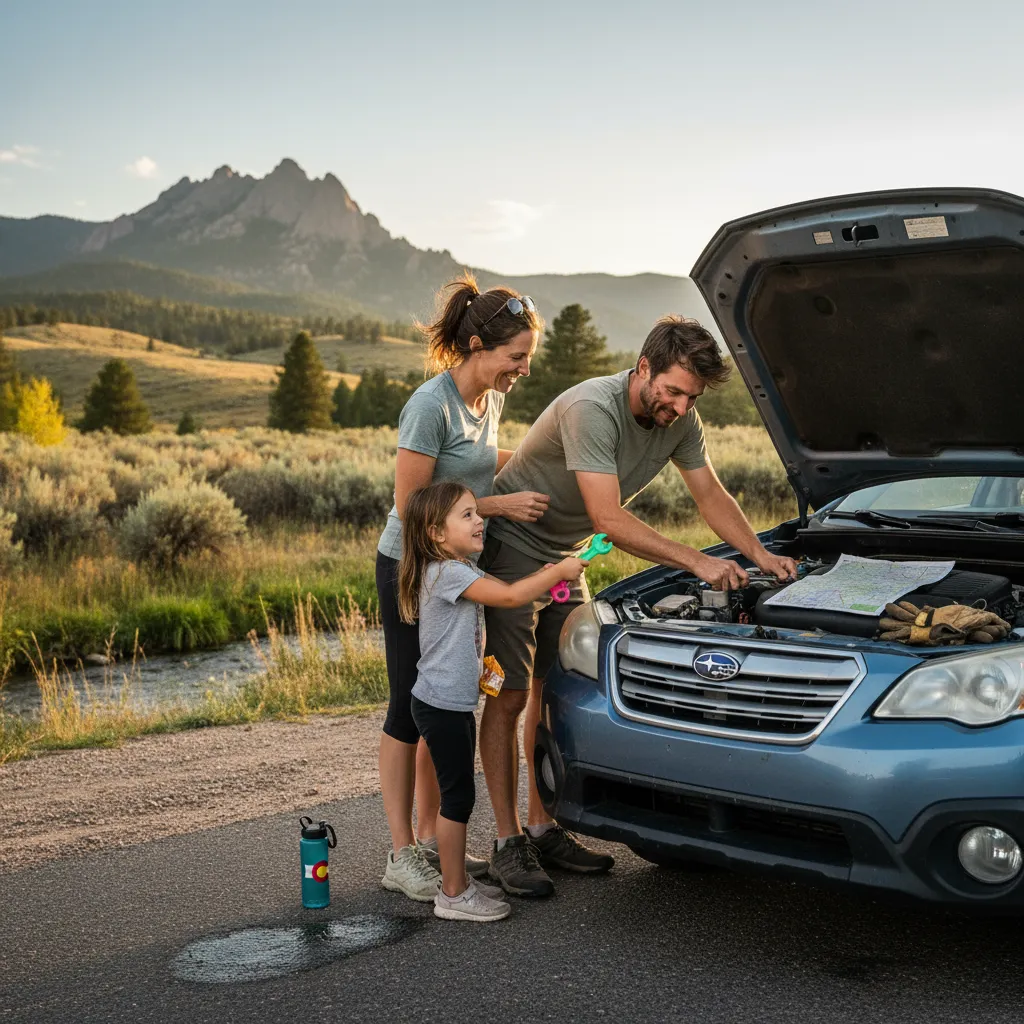
COMPREHENSIVE ROADSIDE MECHANICAL FIRST AID
On-site repair coverage that solves most breakdowns without expensive towing
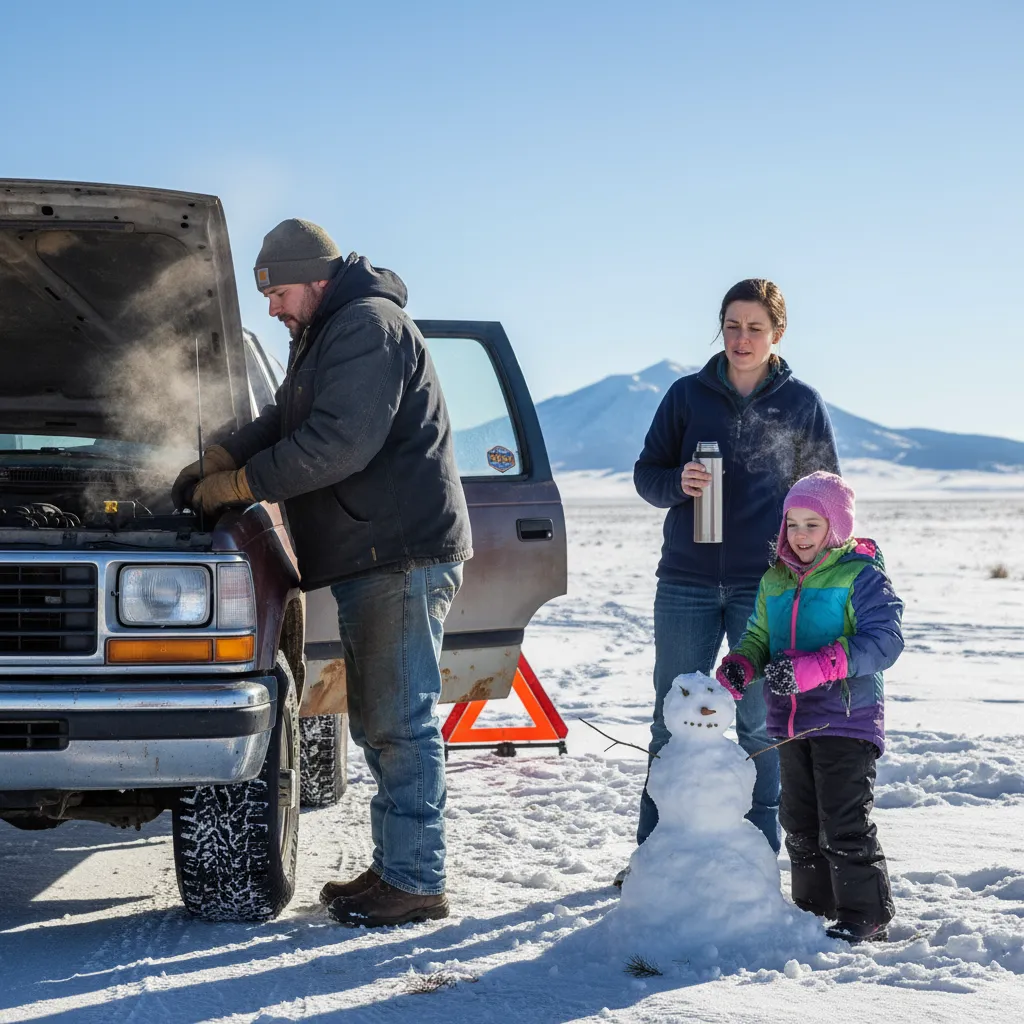
UNDERSTANDING MOUNTAIN WEST BREAKDOWN PATTERNS
Mountain West drivers face breakdown scenarios most roadside assistance programs don't anticipate—serpentine belts that slip off in extreme cold affecting multiple vehicle systems simultaneously, battery failures at -30°F Wyoming temperatures where batteries produce fifty percent less power than normal, cooling system hoses that crack from rapid temperature swings between freezing nights and warm afternoons, and electrical connections that corrode from road salt and harsh weather exposure causing intermittent starting problems. These aren't theoretical risks—approximately 69 million vehicle breakdowns happen annually in America, with about sixty percent involving problems that trained technicians can resolve on-site rather than requiring expensive towing to repair facilities, yet most drivers don't realize their roadside assistance includes diagnostic and repair capabilities beyond just jump-starts and tire changes. We structure roadside coverage specifically for Mountain West conditions, ensuring your plan includes trained technicians who carry diagnostic equipment to identify whether your check engine light requires shop-level intervention or just a loose gas cap, tools to reinstall serpentine belts that have slipped off their tracks, replacement batteries for common vehicle types enabling on-site battery replacement instead of towing, and the mechanical knowledge to differentiate between problems they can fix roadside versus genuine failures requiring shop equipment. The result is coverage that gets you back on the road in thirty minutes instead of being towed fifty miles to the nearest town, paying for towing plus repairs, and waiting days to get your vehicle back—turning potential disasters into minor inconveniences through trained technician intervention at your breakdown location.
COVERAGE MATCHED TO YOUR DRIVING PROFILE
Generic roadside assistance treats all drivers the same, but someone commuting 80 miles daily through rural Wyoming for oil field work needs completely different coverage than someone driving 10 miles in Fort Collins suburbs—and a family taking summer road trips across the Mountain West needs different protection than either of them. We structure roadside coverage by analyzing your specific risk factors: daily driving distance and route characteristics (remote highways versus urban streets), vehicle age and maintenance history (newer vehicles with manufacturer roadside assistance versus older vehicles with higher breakdown risk), typical trip patterns (local errands versus long-distance highway travel), seasonal driving conditions you face (harsh winter commutes versus year-round moderate weather), and whether you have alternative transportation options when vehicles break down (family with multiple vehicles versus single-vehicle household where breakdown creates genuine emergency). For example, an oil field worker commuting from Rock Springs to remote work sites might need coverage with extended service radius reaching 100 miles from breakdown locations, 24/7 availability matching shift work schedules, priority dispatch for workers whose employment depends on reliable transportation, and multiple annual service calls since remote driving generates higher breakdown frequency—while a suburban family with newer vehicles and short commutes needs basic coverage with reasonable service radius and standard response times at lower annual cost. The result is roadside assistance built for YOUR actual driving reality, not a one-size-fits-all policy that either leaves you exposed during remote breakdowns or makes you pay for coverage levels you'll never use because you rarely drive beyond areas with abundant repair facilities and alternative transportation options.
Local expertise matters
Independent agency committed to providing transparent, straightforward insurance solutions for Wyoming and Northern Colorado residents.
REAL BREAKDOWN SCENARIOS, REAL ON-SITE SOLUTIONS
Minor mechanical first aid that turns breakdowns into quick fixes instead of multi-day ordeals
When Your Serpentine Belt Slips Off
You're driving through Wyoming on your way to work, you hear a loud squealing sound from under the hood, and suddenly your power steering goes out, your battery warning light comes on, and your engine temperature starts climbing—your serpentine belt has slipped off its track, and without it your alternator isn't charging the battery, your water pump isn't circulating coolant, and your power steering pump isn't functioning, making your vehicle nearly impossible to control and unsafe to drive. Serpentine belt problems are among the most common mechanical failures roadside assistance encounters, but they're also among the easiest to fix when you have a trained technician—the belt often hasn't broken, it's just slipped off the pulley system due to a worn tensioner or momentary slack, and a technician with belt tools can manually guide the belt back onto all the pulleys and verify proper tracking in under fifteen minutes, restoring all your vehicle systems to normal function without any parts replacement. Many drivers don't realize their roadside assistance includes this level of mechanical intervention, assuming roadside means only jump-starts and tire changes, and they authorize expensive towing to repair shops where they'll wait days for an appointment and pay diagnostic fees plus labor for a repair that could have been completed roadside in minutes. We structure roadside coverage that specifically includes trained technicians who carry serpentine belt tools, understand drive system mechanics well enough to diagnose whether belts can be repositioned or require replacement, carry common replacement belts for situations where belts have actually broken, and can get you back on the road immediately instead of arranging expensive towing—turning a potentially multi-day vehicle unavailability into a thirty-minute roadside service call that costs you nothing beyond your annual roadside assistance premium.
When Dead Batteries Need More Than Jump-Starts
It's January in Casper, temperatures have been below zero for a week, you come out to start your vehicle for work at 6 AM, and your engine just clicks weakly without turning over—your battery is completely dead, and after a coworker jump-starts you in the parking lot, your vehicle dies again thirty minutes later because your battery isn't just discharged, it's failed completely and can no longer hold a charge. Battery-related issues cause approximately thirty percent of all vehicle breakdowns nationwide, making battery service the single most common roadside assistance call, but many drivers don't realize that modern roadside assistance goes far beyond simple jump-starts to include complete battery replacement performed on-site by technicians who carry battery inventories on their service vehicles. When a roadside technician arrives, they can test your battery to determine whether it needs a jump-start (temporary discharge) or complete replacement (permanent failure), and if replacement is necessary, they often have the correct battery type on their truck and can install it immediately for the cost of the battery plus labor—getting you mobile in thirty minutes instead of requiring a tow to an auto parts store or repair shop where you'd pay towing fees, wait for service availability, and lose a full day to something that could have been resolved at your breakdown location. Cold weather battery failures are particularly common in Mountain West winters, as batteries lose approximately fifty percent of their cranking power at zero degrees Fahrenheit compared to normal temperatures, and older batteries with marginal capacity that work fine in summer completely fail when temperatures plummet—making winter the peak season for battery-related roadside calls throughout Wyoming, Colorado, Utah, and Montana. We ensure your roadside coverage includes technicians equipped with battery testing equipment, replacement battery inventories, and the training to accurately diagnose whether your starting problem originates from battery failure, alternator dysfunction, or starter motor issues—providing accurate diagnosis and immediate resolution when possible instead of guesswork that leads to unnecessary towing and extended vehicle downtime.
When Minor Issues Become Major Without Expert Help
Your check engine light comes on during your commute, you notice your vehicle running slightly rough, and you're faced with a decision—do you pull over immediately and call for a tow, potentially spending hundreds on towing plus diagnostic fees for what might be a minor issue, or do you keep driving and risk turning a small problem into catastrophic engine damage if something serious is actually wrong. Modern roadside assistance increasingly includes mobile diagnostic capabilities, with technicians carrying computerized scanners that interface with your vehicle's electronic systems to retrieve diagnostic fault codes identifying exactly what triggered your warning lights—enabling rapid assessment of whether you're experiencing a minor sensor malfunction that poses no immediate danger versus a serious mechanical problem requiring immediate shutdown and towing to prevent further damage. For example, a loose gas cap can trigger check engine lights and evaporative emissions fault codes, but the vehicle is perfectly safe to drive and the problem can be resolved in thirty seconds by properly tightening the cap—yet many drivers seeing check engine lights panic and authorize expensive towing for what amounts to a loose cap. Similarly, a disconnected vacuum hose, corroded battery terminal creating intermittent electrical issues, or fouled spark plug causing rough running might trigger warning lights and poor performance, but trained technicians equipped with basic hand tools can often reconnect, clean, or adjust components roadside, restoring normal function without requiring shop-level intervention. The difference between a driver with comprehensive roadside mechanical first aid coverage and one with basic towing-only coverage is the difference between a thirty-minute diagnostic visit that identifies and fixes a loose connection versus an expensive tow, a day without your vehicle, and a $150 diagnostic fee at a shop to be told you had a loose hose clamp—multiplied across the lifetime of vehicle ownership, access to trained roadside technicians who can diagnose and repair minor issues on-site saves thousands of dollars in unnecessary towing and shop fees while dramatically reducing the inconvenience of vehicle breakdowns.
When Roadside Coordination Becomes Critical
Your vehicle breaks down on a remote Wyoming highway, you call roadside assistance using the number on your insurance card, but then you're trying to coordinate between a dispatch center asking for information you don't have ('what mile marker are you near?' when you're on a rural highway with no markers visible), a tow truck driver who's never serviced this area and doesn't know if they can find you, confusion about whether your coverage includes the service they're recommending, and mounting stress as you realize you're stuck in an unfamiliar location with intermittent cell service trying to manage a situation you're completely unprepared for. Roadside assistance breakdowns often involve complex logistics—determining exact location when you're not at an address, assessing whether problems can be fixed on-site or require towing, coordinating dispatch during weather events or peak demand periods, and making coverage decisions under stress when you don't fully understand your policy terms or what services should be covered versus requiring out-of-pocket payment. Without an insurance agent who knows your coverage and advocates for you during breakdown scenarios, you're alone trying to interpret policy language while simultaneously managing the immediate crisis of being stranded, potentially making expensive decisions you'll regret—like authorizing out-of-network towing at premium rates because you don't know your plan includes specific preferred providers, agreeing to expensive on-site repairs that should be covered but the technician is requesting payment for, or worst of all, waiting hours for assistance that never arrives because dispatch confusion or communication breakdowns left you stranded while everyone assumed someone else was handling your call. We coordinate roadside assistance from the moment you call—helping you communicate your location accurately using GPS coordinates or landmark descriptions when street addresses aren't available, contacting roadside dispatch directly to verify coverage and ensure proper service authorization, staying on the line or available by phone until assistance actually arrives and your situation is resolved, and intervening when service delays or coverage disputes threaten to leave you stranded unnecessarily. You don't pay us anything extra for this coordination—it's part of our service because we know breakdowns are stressful, confusing situations where having an expert advocate who knows your coverage and can cut through dispatch confusion makes the difference between a manageable inconvenience and a nightmare experience that costs you unnecessarily and leaves you stranded for hours.
ROADSIDE ASSISTANCE INSIGHTS THAT MATTER
Practical knowledge to guide your roadside coverage decisions
What Roadside Assistance Actually Covers Beyond Towing
Understanding the full scope of services included in comprehensive roadside assistance—from minor mechanical first aid and battery replacement to fuel delivery, lockout services, and tire changes—and why many drivers only use a fraction of available services because they don't realize technicians can perform on-site diagnostics and repairs. Learn what problems trained technicians can fix at your breakdown location versus issues genuinely requiring towing, and how to maximize your roadside coverage value by requesting appropriate services instead of defaulting to expensive towing for problems that could be resolved on-site in minutes.
Preventing Common Breakdowns Before They Strand You
Proactive vehicle maintenance strategies that address the most common breakdown causes including battery testing before winter, serpentine belt inspection for wear and proper tensioner function, cooling system maintenance to prevent hose failures, and seasonal preparation appropriate for Mountain West climate extremes. While roadside assistance provides essential backup when breakdowns occur, understanding which maintenance items prevent the majority of roadside calls enables you to minimize breakdown frequency and the associated inconvenience—even when you have comprehensive coverage waiting to help when prevention fails.
ROADSIDE COVERAGE FOR EVERY DRIVING STAGE
Young Drivers With Older Vehicles
Just starting out with an older vehicle that's affordable but has higher breakdown risk? Your priority is comprehensive roadside coverage that includes unlimited service calls and extended towing distances, because older vehicles with 150,000+ miles break down more frequently and often require towing to repair facilities rather than on-site fixes. We structure affordable roadside protection focused on the extensive coverage you genuinely need given older vehicle breakdown rates—including mechanical first aid for common failures, battery replacement services, and sufficient annual service call limits that won't leave you paying out-of-pocket when your aging vehicle requires its third or fourth roadside call of the year.
Growing Families With Multiple Vehicles
Managing transportation for a busy family with multiple vehicles, teen drivers, and complex schedules? You're probably maintaining a mix of newer and older vehicles, covering young drivers with less mechanical knowledge, and facing situations where any vehicle breakdown disrupts work commutes, school pickups, or family logistics requiring immediate resolution. We structure family roadside coverage that protects all household vehicles efficiently—potentially multi-vehicle plans that reduce per-vehicle costs, coverage for teen drivers who may not recognize warning signs before breakdowns, and service levels that ensure rapid response when family logistics can't tolerate extended vehicle unavailability during busy weeks.
Established Drivers With Aging Vehicles
Daily driving vehicles that are 8-12 years old approaching the age where breakdown frequency increases substantially? You're experiencing more frequent minor problems like battery failures, belt wear, cooling system hoses cracking, and electrical system issues that may require roadside assistance several times annually—making comprehensive coverage with mechanical first aid capabilities increasingly valuable as your vehicles age beyond the reliable years. We review and potentially expand roadside coverage as your vehicles age—ensuring service call limits accommodate increasing breakdown frequency, coverage includes on-site mechanical repairs that keep aging vehicles mobile longer, and your plan protects you from the escalating breakdown risks that come with continuing to drive older vehicles rather than replacing them.
Newer Vehicle Owners With Manufacturer Coverage
Recently purchased new or certified pre-owned vehicles that include manufacturer roadside assistance for 3-5 years as part of warranty packages? You may not need separate roadside coverage immediately, but you should understand what happens when manufacturer coverage expires and whether it provides the service levels you actually need for your driving patterns—many manufacturer programs have limitations like restricted towing distances or limited service calls that might not match your commuting distances or breakdown risk exposure. We help coordinate roadside coverage as your vehicles transition from manufacturer warranty to independent coverage—ensuring you don't experience gaps when manufacturer programs expire, evaluating whether manufacturer coverage truly meets your needs or supplemental coverage makes sense even during warranty periods, and structuring efficient protection that doesn't duplicate manufacturer benefits but ensures comprehensive coverage throughout your vehicle's ownership lifecycle.
FAQs
Roadside assistance is usually an affordable add-on, often costing less than $5-10 per month. This can save you hundreds on unexpected towing or repair calls, especially driving through rural Wyoming or Colorado.
Response times can vary based on location and time of day, but providers aim for 30-60 minutes in populated areas. In more remote parts of Wyoming or Colorado, it might take a bit longer, but help is dispatched immediately.
Basic plans cover essential services with mileage limits for towing. Premium plans often include extended towing distances, winching service, trip interruption benefits, and sometimes even rental car reimbursement, offering broader protection for longer trips across the Rockies.