
ON-WATER TOWING THAT KEEPS YOUR BOATING ADVENTURES GOING
When your boat breaks down on Mountain West lakes and reservoirs—from Wyoming's Flaming Gorge to Colorado's reservoirs to Utah's Lake Powell—you need towing assistance that actually reaches you, not programs designed for coastal marinas that won't dispatch to remote inland waters. As an independent brokerage serving Wyoming, Colorado, Utah, and Montana, we compare 20+ carriers to find on-water towing coverage that includes emergency assistance on the lakes and reservoirs where you actually boat—with providers who understand inland waterway challenges, not just saltwater operations. We're locals who boat these waters too, and we make sure your marine emergency assistance works when you're miles from the nearest boat ramp with a mechanical failure or fuel problem.

COMPREHENSIVE ON-WATER TOWING ASSISTANCE
Emergency marine assistance that covers YOUR boating patterns on Mountain West waters
UNDERSTANDING MOUNTAIN WEST BOATING RISKS
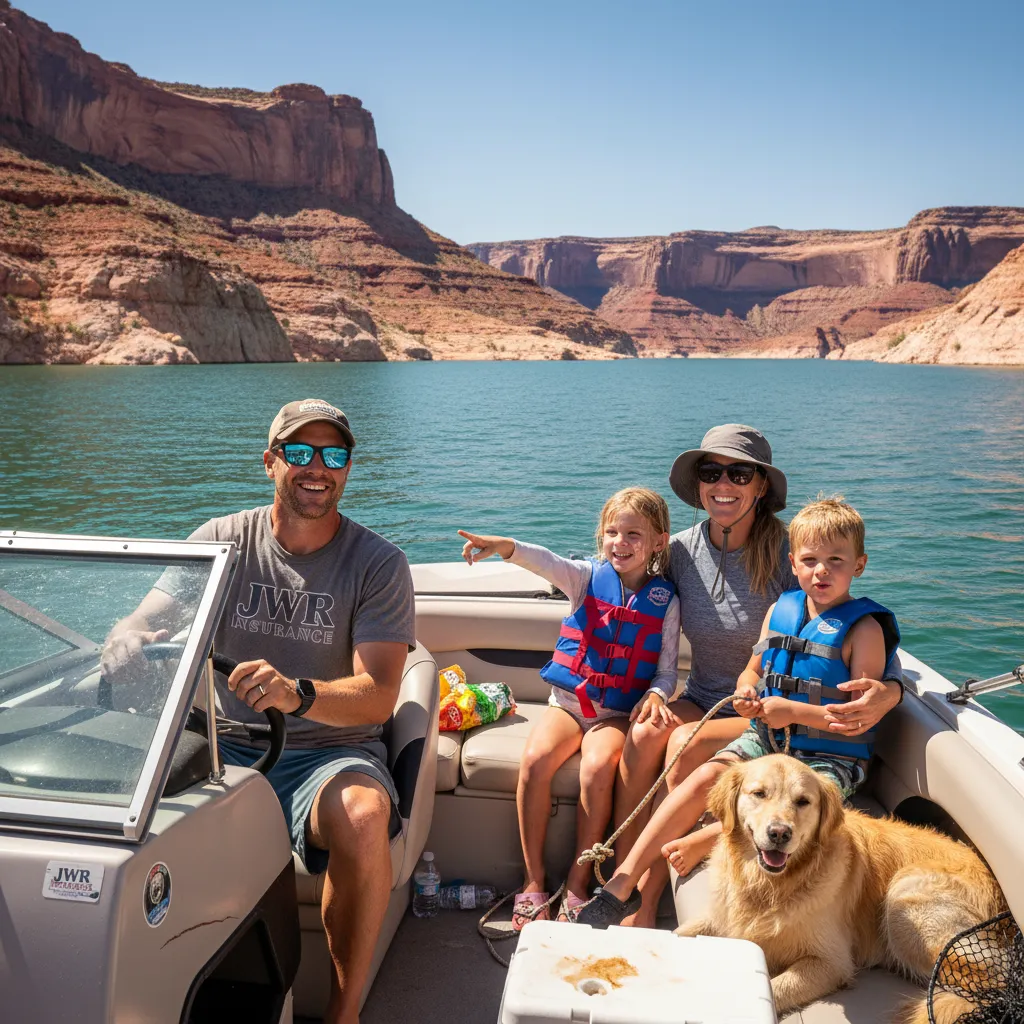
Mountain West boating presents unique challenges that coastal-focused towing programs often don't anticipate—remote inland lakes where the nearest marina may be 20 miles across open water, high-altitude conditions that stress engines differently than sea-level operation, seasonal water level fluctuations at reservoirs like Flaming Gorge and Lake Powell that create unmarked shallow hazards, and temperature extremes where Wyoming lakes can freeze overnight in early season while Utah desert reservoirs hit 100°F by afternoon affecting fuel systems and battery performance. These aren't theoretical risks—boaters on Pathfinder Reservoir, Alcova Lake, Horsetooth Reservoir, and other regional waters face mechanical breakdowns, dead batteries from cold starts, fuel delivery needs, soft groundings on hidden sandbars, and propeller entanglements with alarming frequency, yet many discover too late that their "comprehensive" boat insurance doesn't include on-water towing, or their policy uses coastal providers who won't dispatch to inland waters or charge excessive out-of-network rates. We structure on-water towing coverage specifically for Mountain West inland boating—partnering with carriers whose networks include providers experienced in reservoir and lake rescues (not just ocean operations), coverage that extends to remote locations without street addresses using GPS coordinates, and assistance appropriate for the mechanical challenges of high-altitude boating where engine performance differs from manufacturer specifications designed for sea-level conditions. Whether you boat Seminoe Reservoir, Boysen Reservoir, Carter Lake, Jordanelle Reservoir, or venture to massive waters like Flaming Gorge and Lake Powell, we ensure your emergency assistance coverage actually works in the specific inland environments where Mountain West families boat.
CUSTOMIZED TOWING OPTIONS
Generic boat towing coverage treats all boaters the same, but a weekend family cruiser on Horsetooth Reservoir needs completely different coverage than someone running a bass boat on tournament circuits or a pontoon boat owner making weekly trips to Alcova Lake—and none should pay for assistance they'll never use or face gaps when they need help most. We structure on-water towing coverage by analyzing your specific boating profile: how frequently you boat (occasional summer weekends versus weekly trips versus tournament schedules), where you boat (single home lake versus traveling to multiple reservoirs across states), vessel type and age (newer reliable boats versus older boats more prone to breakdowns, sailboats versus powerboats with different mechanical failure patterns), typical distance from shore when cruising (stay near marinas versus crossing large open water expanses), and whether you need coverage for personal watercraft in addition to your primary boat. For example, a family that boats Pathfinder Reservoir every other weekend during summer might need basic towing coverage through an insurance endorsement at $30-50 annually providing unlimited local tows, while a serious angler who fishes tournaments across Wyoming, Colorado, and Utah reservoirs needs comprehensive membership coverage like Sea Tow or TowBoatUS providing reciprocal assistance across multiple states with higher service limits and priority dispatch—and a pontoon boat owner with a 20-year-old outboard motor facing higher breakdown probability needs coverage that doesn't exclude older vessels or limit claims frequency. The result is towing protection matched to your actual boating patterns and mechanical risk profile, not generic coverage that either leaves you stranded on remote waters or makes you pay for assistance networks you'll never use because you boat the same local lake every time.
Local expertise matters
Independent agency committed to providing transparent, straightforward insurance solutions for Wyoming and Northern Colorado residents.
REAL BOATING EMERGENCIES, REAL RESCUE
Emergency towing that prevents breakdowns from becoming dangerous situations
When Engines Fail Far From Shore
You're cruising across Flaming Gorge on a beautiful Saturday afternoon with your family aboard, you're 8 miles from the nearest boat ramp in open water, and your outboard motor suddenly loses power and dies completely—leaving you drifting with no propulsion, afternoon winds building, and the nearest boats too far away to signal for help. Engine failures are the single most common reason boaters need emergency towing assistance, with dead batteries, fuel system problems, overheating, electrical failures, and mechanical breakdowns accounting for nearly half of all on-water rescue calls—and when failure happens in the middle of a large reservoir or lake, you're facing a genuinely dangerous situation where wind and current can push you miles from your intended destination or into hazardous areas before you can arrange help. Many boaters discover too late that their boat insurance doesn't include on-water towing at all (it's typically an optional endorsement they didn't add), or their coverage uses a reimbursement model requiring them to arrange and pay for commercial towing that costs $150-300 per hour plus a dispatch fee, with a 15-mile tow across Pathfinder Reservoir or Seminoe Reservoir easily running $500-800 that they must pay upfront and hope to recover later through claims paperwork. We structure on-water towing coverage that provides direct-dispatch emergency assistance when engines fail—either through affordable insurance endorsements like Progressive's Sign & Glide at $30-50 annually providing unlimited tows with carriers handling payment directly, or comprehensive memberships like TowBoatUS or Sea Tow providing priority service with no out-of-pocket costs beyond annual membership fees—ensuring engine failures become manageable inconveniences with professional rescue coordinated by a single phone call, not dangerous drift situations where you're scrambling to find help while your boat is pushed into shipping channels or toward rocky shorelines.
When Fuel Runs Out Unexpectedly
You're enjoying an extended afternoon on Lake Powell with friends, you've been cruising between canyons exploring side channels, and suddenly your engine sputters and dies—you check the fuel gauge and realize you've run completely out of gas miles from the nearest marina, with no spare fuel aboard and the afternoon sun creating dangerous heat exposure for passengers if you're stranded for hours waiting for help. Running out of fuel is one of the most common and preventable boating emergencies, yet it happens regularly when fuel gauges malfunction (showing quarter-tank when you're actually empty), when boaters misjudge consumption rates during extended cruising or water sports that use substantially more fuel than relaxed cruising, when reservoir water level changes mean the "nearby" marina you planned to refuel at is now another 45 minutes away, or when unexpected wind or current forces you to run at higher RPMs consuming fuel faster than anticipated. Without on-water towing coverage that includes fuel delivery, you're facing either an expensive commercial tow (because even though you just need fuel, towing companies charge full hourly rates to deliver it), calling friends or family to bring fuel if they have a boat and can find you (creating hours of delay and asking others to interrupt their day), or in worst cases, accepting fuel from strangers at whatever price they demand—with stories of boaters paying $50-100 for a few gallons delivered by opportunistic "helpers" who prey on stranded boaters. We structure towing coverage that specifically includes fuel delivery as a covered service—with programs like TowBoatUS, Sea Tow, and Progressive Sign & Glide sending assistance vessels to your location with fuel (you pay only for the actual fuel at reasonable rates, not the delivery service), getting you back to boating within 30-60 minutes instead of facing multi-hour delays and expensive tows—and equally important, we make sure you understand that fuel delivery is covered so you'll actually call for help instead of attempting dangerous solutions like flagging down strangers or trying to paddle/drift toward shore in boats weighing thousands of pounds.
When You Run Aground on Sandbars
You're navigating an unfamiliar area of Boysen Reservoir or exploring a cove on Alcova Lake, the water looks plenty deep, and suddenly you feel a sickening crunch as your boat runs hard onto a hidden sandbar or rock shelf—your propeller is stuck, you can't reverse off without potentially damaging your lower unit, and you're genuinely stuck with water levels too low to float free even at full throttle. Soft groundings on sandbars, mudflats, and shallow areas are extremely common on Mountain West reservoirs where water levels fluctuate dramatically throughout the season (Lake Powell and Flaming Gorge can vary 50+ feet between spring runoff and late summer drawdown), navigation charts don't reflect current conditions, and areas that were safely navigable last week are now hazardous shallows—but many boaters don't realize their towing coverage may not include ungrounding assistance, or worse, their policy excludes "hard" groundings where there's any risk of hull damage, leaving them to determine in real-time whether their situation qualifies for coverage or requires expensive salvage operations. Professional ungrounding assistance typically costs $200-600 depending on how stuck you are, how long it takes to refloat your boat, whether specialized equipment is needed, and whether the towing company decides your situation qualifies as "salvage" (entitling them to 10-20% of your boat's value as compensation) rather than simple towing—and without coverage, you're either paying these costs out of pocket or attempting DIY ungrounding that risks damaging your boat's hull, propeller, or lower unit far worse than the original grounding. We structure towing coverage that specifically addresses soft ungrounding situations—with clear definitions of what qualifies (boat surrounded by water on all sides, no immediate danger, can be refloated within 15 minutes or at next tide), coverage from providers experienced in reservoir groundings who understand water level fluctuations and seasonal hazards, and we make sure you know the difference between covered soft groundings and excluded hard groundings or salvage situations—preventing surprise bills when you thought you were covered but discover your grounding doesn't qualify under your policy's specific language.
When Towing Becomes a Claims Battle
Your boat breaks down on Horsetooth Reservoir on a busy holiday weekend, you call for assistance and authorize a $400 tow back to the marina, you submit your towing receipt to your insurance company expecting reimbursement since you have "towing coverage" on your policy, and three weeks later you receive a letter denying your claim because you used a non-network provider, the hourly rate exceeded your policy's $150/hour reimbursement cap, or the insurer claims you should have called their dispatch center for pre-authorization you didn't know was required. Insurance endorsement towing coverage disputes are frustratingly common when boaters don't understand the difference between direct-pay programs (where the insurance company coordinates and pays the towing service directly) versus reimbursement programs (where you pay upfront and submit claims for repayment), don't realize their policy caps reimbursement at specific hourly rates or per-incident maximums that may not cover actual emergency towing costs in remote areas, or didn't know they were required to call a specific dispatch number for pre-authorization or risk denied claims—leaving them holding bills for hundreds of dollars they thought insurance would cover. Without an independent agent who explains exactly how your towing coverage works and what procedures you must follow during emergencies, you're navigating complex policy language during stressful breakdowns—trying to read fine print on your phone while drifting in open water, arguing with towing companies about whether they're "in network," and making expensive decisions without understanding whether you'll be reimbursed or personally responsible for costs. We explain your towing coverage in plain English before you ever need it—clarifying whether you have direct-pay or reimbursement coverage, what phone numbers you must call for pre-authorization, what hourly rate caps or per-incident limits apply, whether you're required to use specific network providers or have flexibility to call any available service, and what documentation you need to submit for reimbursement claims—and when towing claims get disputed, we advocate with your insurance carrier to push for fair settlements, challenge unjustified denials, and help you navigate the appeals process, rather than abandoning you to fight claim disputes alone while the carrier uses policy technicalities to avoid paying legitimate towing expenses you thought were covered.
ON-WATER TOWING INSIGHTS THAT MATTER
Practical knowledge to guide your marine emergency coverage decisions

Understanding Towing Membership vs. Insurance Endorsement Coverage
Deciding between standalone towing memberships like Sea Tow or TowBoatUS versus insurance endorsement coverage like Progressive Sign & Glide involves real tradeoffs—memberships typically cost $150-250 annually but provide unlimited towing with no per-incident limits and priority service, while insurance endorsements cost $30-50 annually but may have distance limitations, hourly rate caps, or reimbursement hassles. This guide breaks down the actual costs and coverage scope of major towing programs, when memberships make financial sense versus when affordable endorsements provide adequate protection, and how multi-boat households can leverage membership coverage that extends to all vessels versus needing separate insurance endorsements per boat.
What On-Water Towing Actually Covers (And Doesn't)
Towing coverage includes far more than just boat transportation—battery jump-starts, fuel delivery, soft ungroundings, propeller disentanglements, and minor on-water repairs are typically covered—but critical exclusions like hard groundings requiring salvage operations, diver services, pre-existing mechanical problems, and commercial use can leave you with surprise bills when you thought you were covered. Understanding exactly what qualifies as a covered "soft grounding" versus an excluded "salvage operation," why your policy might not cover towing to repair facilities versus just to nearest safe harbor, and what documentation you need during emergencies prevents claim disputes after the fact.
COVERAGE FOR EVERY BOATING STAGE
First-Time Boat Owner
Just bought your first boat and learning to navigate local waters? Your priority is affordable basic towing coverage that protects you from expensive emergency situations while you build boating skills and mechanical confidence—without paying for comprehensive assistance programs designed for experienced boaters who venture into remote waters. We structure affordable towing coverage through insurance endorsements like Progressive Sign & Glide at $30-50 annually providing unlimited emergency assistance on your home lake, giving you peace of mind during your first seasons on the water without overwhelming your boat ownership budget.
Active Recreational Boater
Boating regularly and exploring different lakes across the region? You're probably trailering your boat to various Wyoming and Colorado reservoirs, spending full days on the water, and your mechanical breakdown risk has increased with usage frequency and distance from familiar home waters. We expand towing coverage to comprehensive membership programs like TowBoatUS or Sea Tow that provide reciprocal assistance across multiple states, priority dispatch when you're far from home, and unlimited service without per-incident caps—ensuring breakdowns at unfamiliar lakes don't strand you hours from help or cost you hundreds in out-of-network emergency fees.
Multi-Boat Household
Own multiple boats or added personal watercraft to your family's fleet? You're managing towing coverage across various vessels with different uses—possibly a fishing boat, a family cruiser, jet skis for the kids—and you need emergency assistance that covers your entire fleet without requiring separate policies for each watercraft. We structure membership coverage that extends to all boats and PWCs you own, rent, or operate under a single annual membership, dramatically reducing per-vessel coverage costs while ensuring comprehensive protection across your family's entire watercraft collection—plus we coordinate coverage so your boat insurance and towing membership work together without gaps or duplication.
Serious Cruiser or Tournament Boater
Traveling extensively to tournaments, making extended cruising trips, or exploring remote waters like Lake Powell's back canyons? You're operating in areas where professional towing response may take hours, you're far from familiar repair facilities, and your breakdown scenarios require the highest level of emergency assistance including potential overnight support and long-distance transport to specialized service centers. We structure premium towing coverage with extended service radius (50-100+ miles from dispatch), out-of-area reimbursement for locations beyond standard coverage territories, and potentially dual memberships with both Sea Tow and TowBoatUS to maximize geographic coverage—ensuring your serious boating adventures have professional rescue backup regardless of how remote your destination or how complex your mechanical emergency.
FAQs
Standard boat and personal watercraft insurance policies generally exclude certain situations. This often includes normal wear and tear, mechanical breakdown due to lack of maintenance, insect or animal damage, or damage from intentional acts. Using your boat for racing or commercial purposes (unless specifically endorsed) is also typically not covered. It's important to read your policy carefully to understand limits and exclusions, a process JWR Insurance is happy to help you with so there are no surprises.
If your boat or personal watercraft is damaged or involved in an incident, the first step is always to ensure safety and prevent further damage. Then, report the incident to authorities if necessary and gather all relevant information, including photos and contact details of involved parties or witnesses. Contact JWR Insurance as soon as possible; our team will guide you through filing the claim, help you understand the next steps, and assist in getting your vessel inspected and repaired. Our goal is to make the claims process as smooth and stress-free as possible.
Boat and personal watercraft insurance typically covers a wide range of perils, from physical damage to your vessel due to collisions, fire, theft, or vandalism, to liability coverage for injuries or damage you might cause to others or their property. Many policies also include protection for medical payments for injuries to you or your passengers, and even wreckage removal should your boat sink in a local lake. This comprehensive coverage ensures you're protected whether you're on the open water or docked at a marina.
While boat and personal watercraft insurance isn't always legally mandated everywhere, it's a crucial investment for peace of mind, especially when enjoying Wyoming or Colorado's vast waterways like Lake Powell or Glendo State Park. Accidents happen, and without insurance, you'd be solely responsible for potentially significant repair costs—which can easily run into thousands of dollars for even minor damage—or liability claims if someone gets injured or property is damaged. Consider it protection against the unexpected, allowing you to focus on fun, not financial worry. Contact JWR to discuss your specific needs and see how affordable this protection can be.
The cost of boat or personal watercraft insurance can vary significantly based on factors like the type and value of your vessel, its primary usage (fishing, recreation, etc.), and where you operate it—such as the high winds on Flaming Gorge or the bustling waters of Horsetooth Reservoir. A newer, high-performance boat will cost more to insure than an older fishing boat. For an accurate quote tailored to your specific marine adventures, contact JWR Insurance; we can help you navigate the options and costs.
When insuring your boat, you generally have two main valuation options. "Actual Cash Value" (ACV) coverage pays out the replacement cost of your boat or parts, minus depreciation, meaning the payout will reflect its current market value, not what you originally paid for it. "Agreed Value" coverage, on the other hand, means you and your insurer agree on a specific value for your boat at the start of the policy, and that's the fixed amount you'll receive if it's declared a total loss, regardless of depreciation. For newer or custom vessels, Agreed Value often provides greater peace of mind. We can help you decide which option best fits your boat and budget.